Read texts before conclusions
Tea culture writing tends to fail in two directions. One turns legend into evidence. The other projects today’s tea-table aesthetic backwards onto an ancient life. Before accepting a claim, slow down: who wrote it, when, for whom, in which edition, and what did later editors add?
This is not a history of tea culture. It offers four entries: person and book, institutions and trade, local custom, and art and daily life. Each entry comes with a question to carry forward, not an answer to memorise.
Entry one: a person and a book
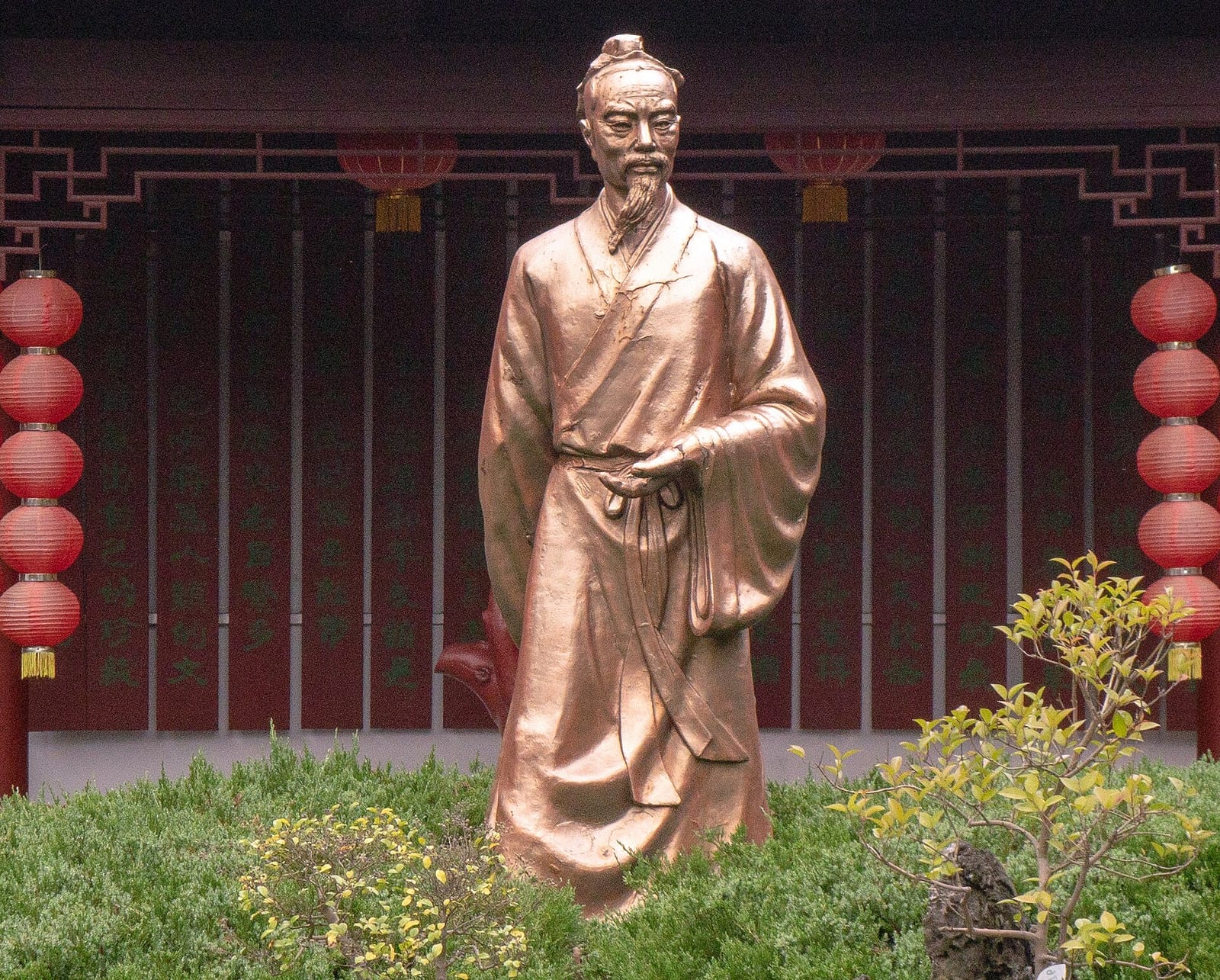
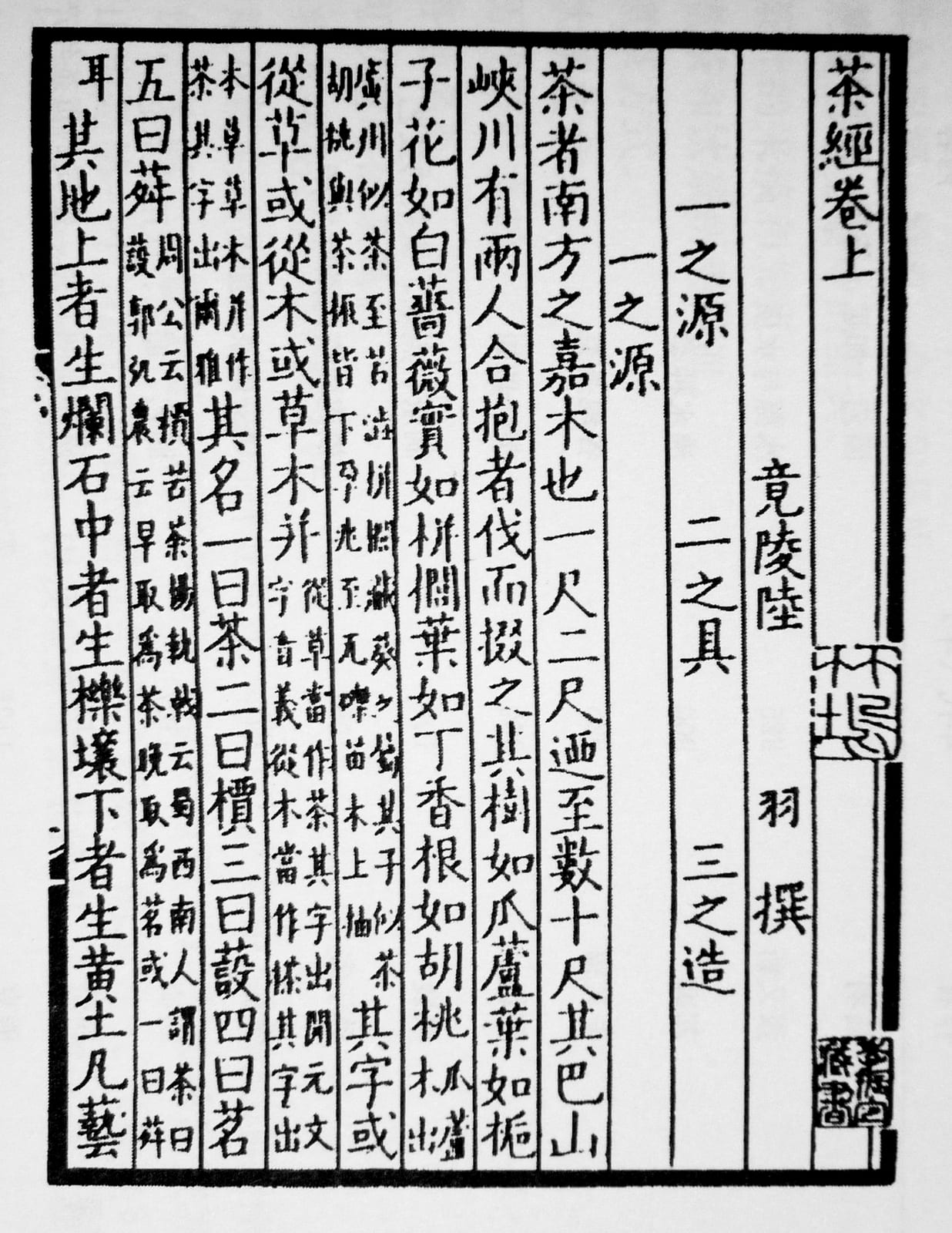
Begin with Lu Yu and The Classic of Tea. Read the chapter structure first: origin, implements, manufacture, vessels, boiling, drinking, historical records, producing regions, simplification, and illustrations. The structure itself shows that Tang-era “tea” involved the plant, tools, making, boiling, history and geography at once. It was not a separate aesthetic object.
Read the text in three layers: the Tang original, later annotations, and modern interpretation. The original shows what Tang readers cared about. Annotations show how later readers understood it. Modern interpretation often carries the questions of today’s tea industry or tea-culture movement. All three layers are useful, but they are not the same layer.
The Chinese Text Project provides both Chinese and English texts, which is convenient for locating keywords and parallel passages. The English helps you find your way. When you reach terms such as geng, mo, bo or junyong, go back to the Chinese and the notes. A translation alone will not carry the technical texture.
Entry two: institutions and trade
Tea does not live only in poems. It is also a tax base, a tribute, a border trade good, a port commodity and an everyday purchase. When reading institutional or trade history, look for four kinds of material: rules and statutes, ledgers and contracts, local gazetteers, and travel accounts or notebooks by contemporaries.
Statutes tell you what was prescribed. Ledgers and contracts tell you what was actually done. Gazetteers tell you how a place remembered itself. Travel accounts tell you what an outsider noticed. These four often disagree. The disagreement is not a nuisance; it is often the gap between regulation and life.
This section deliberately avoids a list of dates and routes, because those claims need specialist historical support. Treat it as a question list instead: who taxed tea, who moved it, in which markets was it traded, in what currency was it settled, and which groups were excluded from the trade? When you read a specific study, fill the list with evidence.
Entry three: put custom back into place
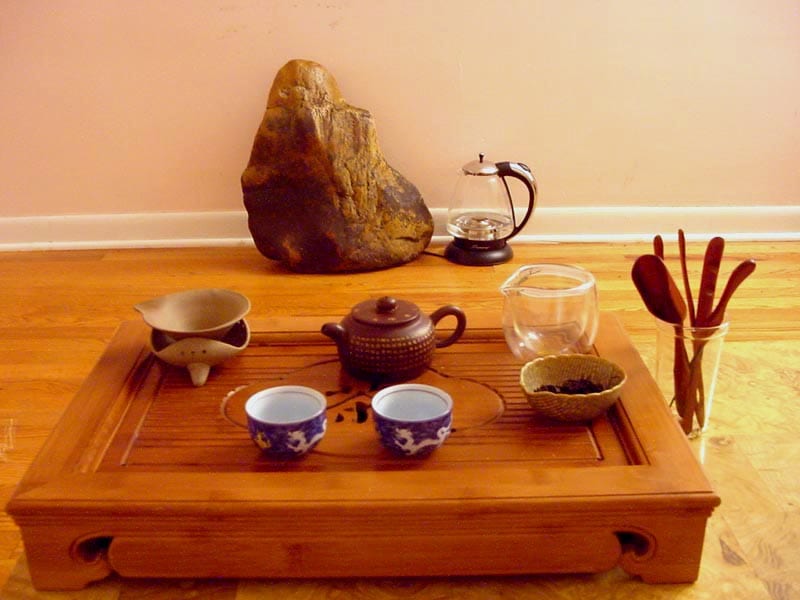
Gongfu tea, lei cha, butter tea and mint tea each belong to particular regions, communities and histories. Do not turn one local habit into “Chinese tea ceremony” as a whole, and do not use “gongfu” as a generic word for any elaborate brewing method.
Take Chaozhou gongfu tea as one example. The Hiroshima University study argues that Wuyi oolong entered Chaozhou in the eighteenth century, became popular during the Qianlong and Jiaqing reigns, took a clearer gongfu form in the nineteenth century, was localised at Phoenix Mountain in the early twentieth century, and that Phoenix Dancong gradually replaced Wuyi tea as the main leaf from the mid-to-late twentieth century. This places gongfu tea inside trade, migration and local tea production. It is not an unchanging rite handed down from antiquity.
When reading custom, also separate practitioners, performers and observers. A gongfu demonstration in a teahouse, a family’s daily brewing and a heritage display may share movements but not purpose, audience or pace. They are related practices, not the same practice.
Entry four: art as supplement, not complete evidence
Tea paintings and poems record sensory and domestic details that other documents omit: how vessels were arranged, how fire was described, where guests sat, how rain and steam were heard. They are also creations. A poet exaggerates. A painter omits. An inscription rewrites.
When using art as evidence, ask three questions: for what occasion was it made, for whom, and does it match the vessels, institutions or local habits of its period? If it does not match, it may express an ideal rather than a daily fact.
Reading principles
- Layer before judging. Original, annotation, modern interpretation and marketing copy each belong in their own place.
- Ask for the material behind the claim. Is it a standard, an archive, a gazetteer, a memoir, or tourism copy?
- Keep disagreement visible. When two explanations exist, do not rush to merge them into “both are true”.
- Separate ideal from practice. A tea gathering in a poem, a museum display and a family’s daily pot are not necessarily the same life.
- Admit the gap. Where there is no material, write “not known”, rather than filling the gap with imagination.
A four-week path
Week one: read only the chapter structure of The Classic of Tea, plus the chapters on origin and manufacture. Write down every term you cannot explain. Week two: read one study of a local custom, focusing on its sources and argument before its conclusions. Week three: choose one tea vessel or one tea painting and ask where it was used and who was looking. Week four: turn the first three weeks into a single page of notes: which claims have material behind them, and which are only narration.
After reading an article on tea culture, try to answer: what material does it use, whom does it want to persuade, and what does it leave out? If you cannot answer all three, the piece may be atmosphere rather than knowledge.
Sources and status
This page uses the Chinese and English texts of The Classic of Tea as a primary reading entry, the China National Tea Museum for its public institutional role, and the Chaozhou gongfu study for a specific account of local practice. Each source does a different job and none replaces the others. All migrated pages are currently marked reviewed, but sources and wording will continue to be revised.