Life
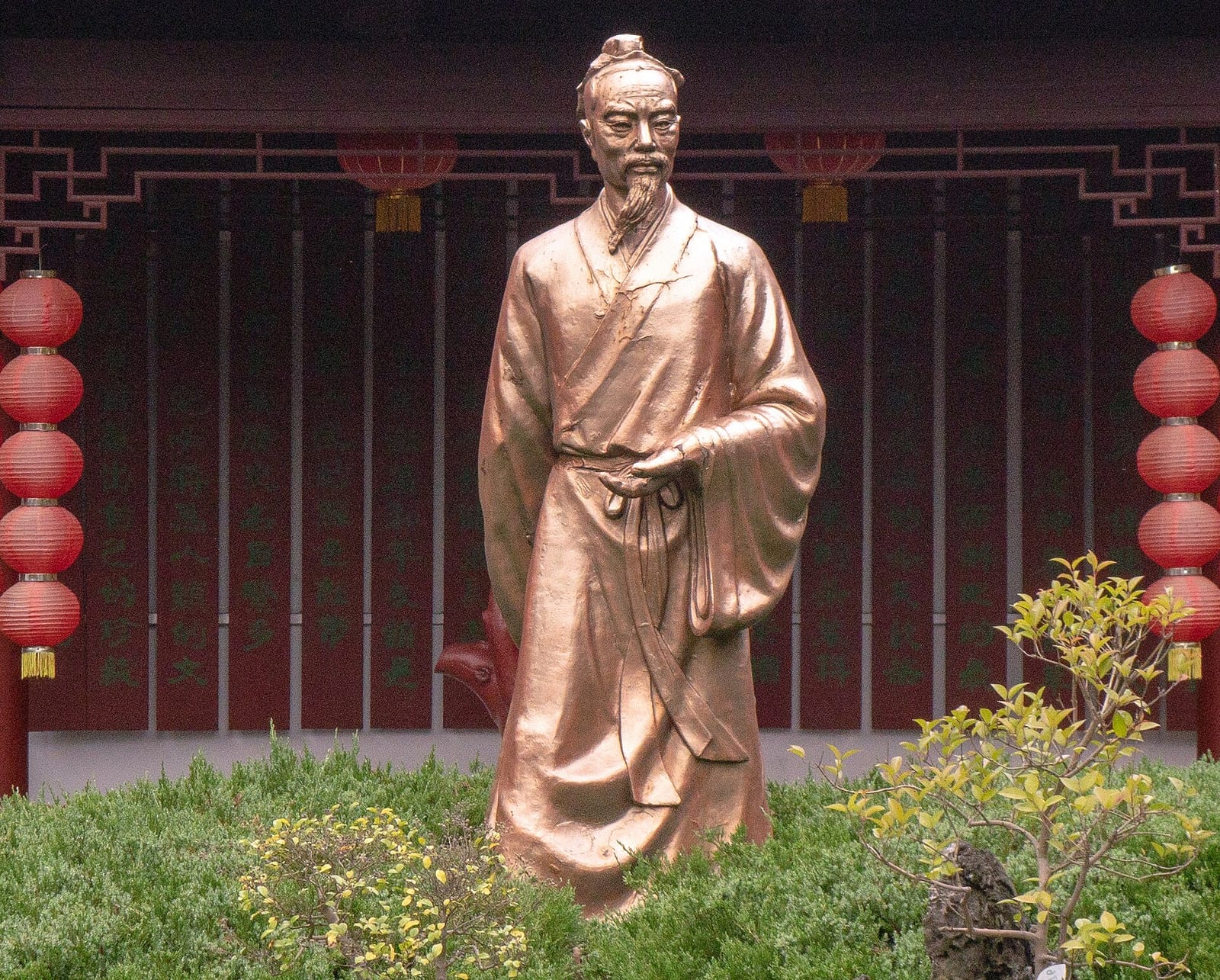
Lu Yu (c. 733–804), courtesy name Hongjian, was a Tang-era tea scholar from Jingling in Fuzhou (modern Tianmen, Hubei). Later generations call him the “Sage of Tea”. Traditional accounts describe an orphaned childhood, upbringing in a monastery, a period as a performer and years of travel. After the An Lushan rebellion he moved south and lived for a long time around Huzhou, where he associated with the poet-monk Jiaoran and other literary figures.
Tea and the Classic of Tea
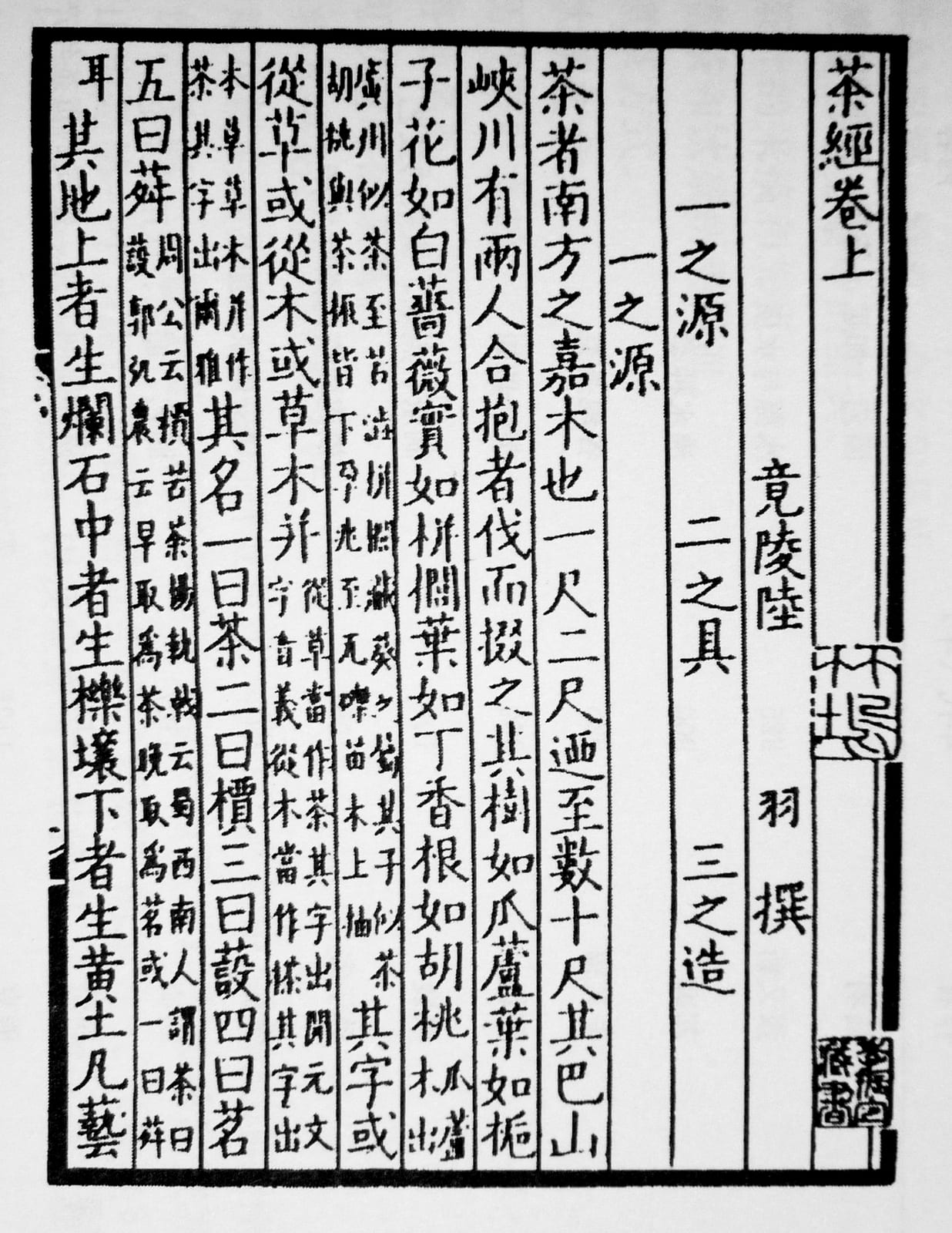
Lu Yu’s central contribution is the Classic of Tea (Chajing), compiled in the late eighth century. Its ten chapters cover the origins of tea, picking and processing, utensils, preparation, sources of water, historical records and tea-producing regions. It is more than a practical brewing manual: it turns scattered everyday experience into a body of knowledge that can be recorded, compared and taught.
Lu Yu is also associated with the evaluation of water sources and with later tea legends. Many stories about him were elaborated centuries after his death.
Method and influence
The Classic of Tea established a framework followed by many later Chinese tea books. Its method was to place tea inside geography, tools, processing and history: first the source of tea, then picking, making and utensils, and finally preparation and producing regions. That structure shaped later tea books, local gazetteers and tea writing. Lu Yu is also associated with the evaluation of water sources and with later tea legends.
Image and limits of the record
Lu Yu himself became a cultural figure, with shrines, tea-god offerings, “Sage of Tea” temples and vivid local anecdotes. When reading his life, it is useful to separate Tang-era evidence from later retellings. His exact birth and death years, childhood and itineraries are not fully consistent across surviving accounts. “Sage of Tea” is a later honorific, not a Tang official title.
Related reading
- The Classic of Tea — Lu Yu’s major work.
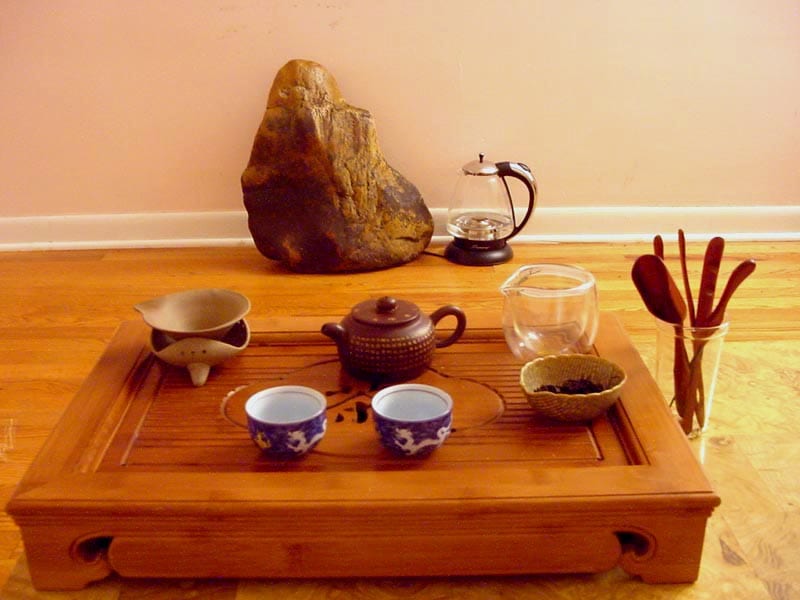
- Gongfu tea — a much later tea practice, not a reconstruction of Tang preparation.
- West Lake tea area — the later development of a Tang-era tea region.
Sources and status
- New Book of Tang (Wikisource, Chinese text) — Official history containing the biography of Lu Yu.
- The Classic of Tea (Wikisource, Chinese text) — Full public-domain text of Lu Yu’s Classic of Tea.
- Biography of Lu Yu in the New Book of Tang — Traditional dynastic history.
- The Classic of Tea — Bibliographic reference; no stable online edition supplied.
AI-edited bilingual page; factual claims are bounded by the listed sources and are not a human-expert endorsement.