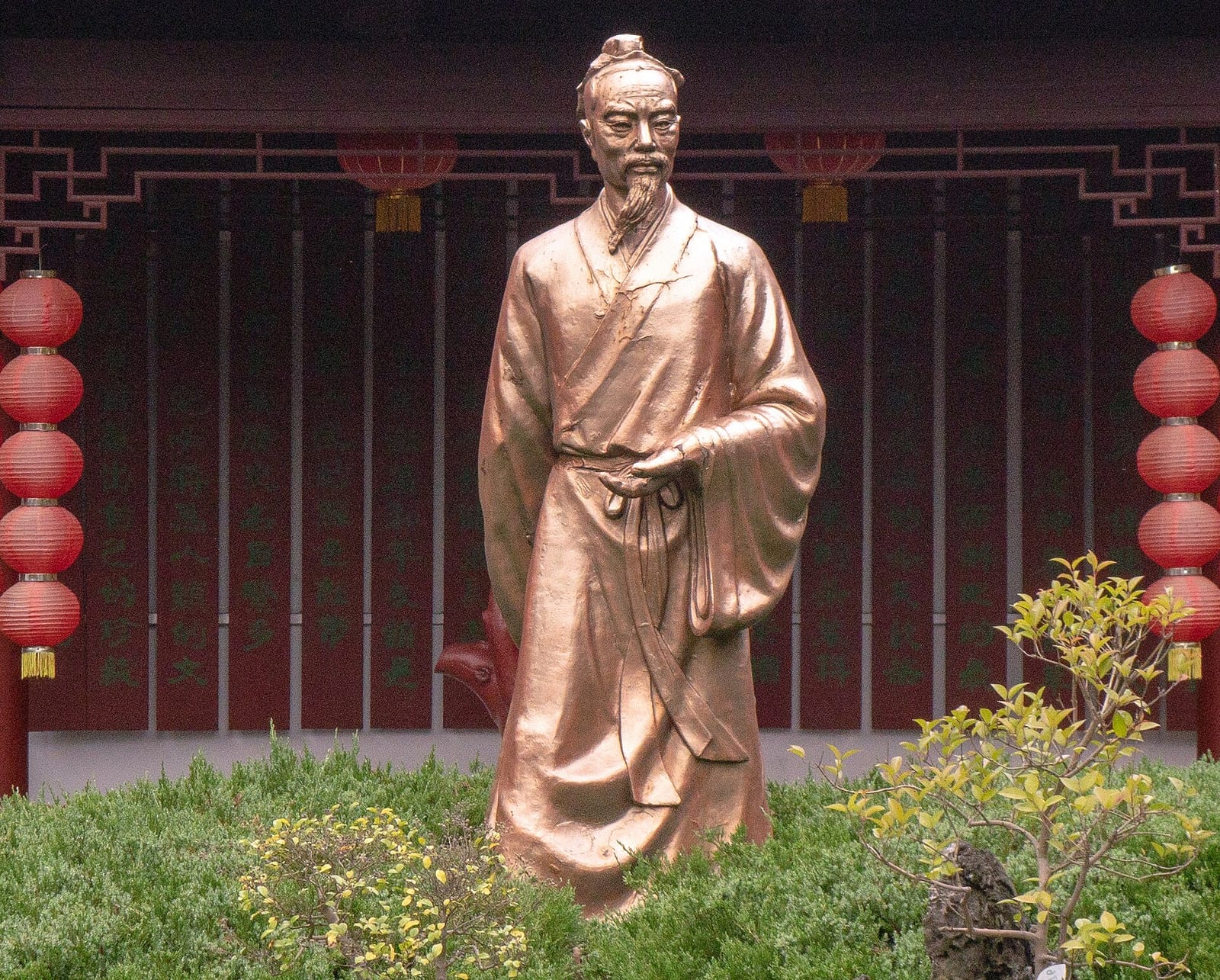
Who he was
Lu You (1125–1210), courtesy name Wuguan, styled Fangweng, was a Southern Song poet and official from Shanyin, Shaoxing. He lived through the humiliation of the north's fall and the long standoff between Song and Jin; his poetry is famous for patriotic anger and for detailed daily life. He wrote more than 9,000 poems, and tea runs through them: planting tea, picking tea, roasting tea, brewing tea, tea ware, tea markets, tea taxes and tea as a gift.
Tea in his poetry
Lu You's tea poems are valuable because they are concrete. He writes about “tea shoots” and “tea baskets”, about the sound of the rolling mill, about a “tea market” in a mountain village, about a “tea tax” official, about drinking tea with monks and friends. He also writes about the tea of Shaoxing and Fujian, and about the difference between “tea for guests” and “tea for oneself”. These details make his poems useful material for the social history of Southern Song tea, not just for literary appreciation.
The attribution problem
“Shan Jia Qing Gong” (Mountain Dwelling, Pure and Simple) is a Song tea book often attributed to Lu You, but modern scholarship generally regards the attribution as unreliable and the text as a later compilation. Do not use Lu You's name to give authority to its processing details. If you quote a tea passage attributed to Lu You, check the poem collection first; some online quotations circulate without a source.
How to read him
Start with the poems set in Shaoxing and in his official postings: they show tea as part of local life, not as a luxury object. Then read the poems about tea gifts and tea markets; they show the circulation of tea. Finally, read the poems about drinking alone; they show tea as a way to calm the mind. Keep a distinction between “what the poem describes” and “what the poem means”.
Common misunderstandings
Lu You is not a tea-processing expert, and his poems are not a manual. “Lu You wrote Shan Jia Qing Gong” is a common but shaky attribution. The number of his tea poems depends on how broadly “tea poem” is defined; “more than 300” is a common estimate, not a fixed count.
What to check
When you meet a “Lu You tea quote” online, ask for the poem title and the collection. If only the line is given, it may be misattributed or paraphrased. For historical use, compare the poem with local gazetteers and tea books; for literary use, read the whole poem, not only the tea image. Keep the poet and the tea manual separate.
Source boundary
This page relies on China Tea and the Chengdu Tea Culture Association. Dates follow standard literary history. The “Shan Jia Qing Gong” attribution is treated as disputed, and the page does not repeat it as fact.
Tea poems and daily life
Lu You left hundreds of tea poems on boiling, whisking, dividing tea, utensils, tea mountains, teahouses, sending tea and drinking while ill; he served and lived in Sichuan, Zhejiang and Jiangxi, and his poems carry strong local experience. Tea is daily life, friendship, nostalgia and old-age comfort.
Patriotism and tea
Lu You is known for patriotic poetry, and tea poems often intertwine with country, travel and ageing; tea is not only elegance but “quenching thirst,” “breaking sleep” and “comforting age.” The vessels, origins and customs in his poems fill Song tea-history detail.
Boundaries
Lu You is not the “Tea Sage,” and his poems are not a tea manual. Poems exaggerate, allude and express; they cannot be used directly as output or craft data. Read him by separating literary imagination, historical life and later anthologies; the value is quantity, scene and feeling, not “every line is reliable.”