What it is
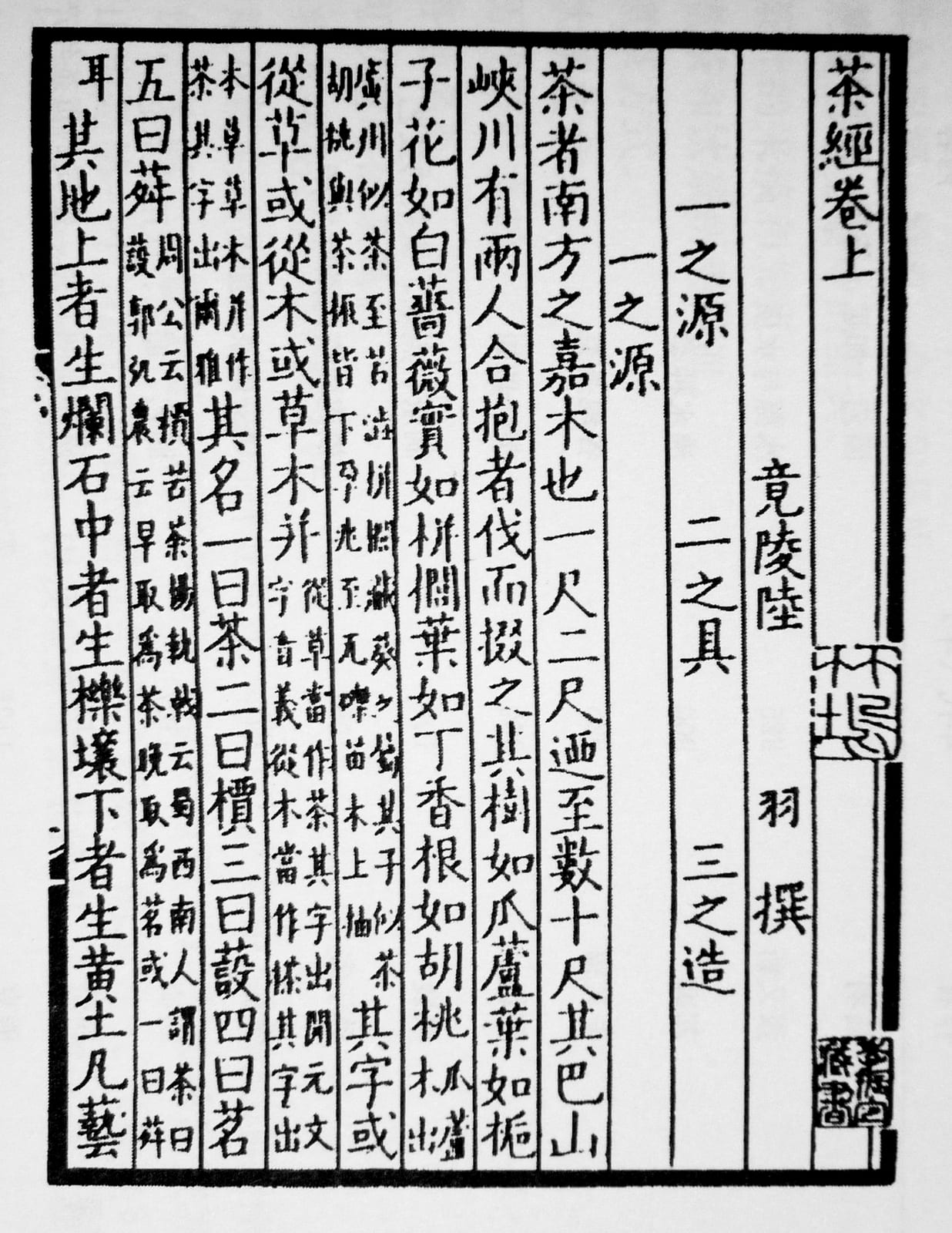
The Sequel to the Classic of Tea (Xu Cha Jing) is a Qing-dynasty tea book compiled by Lu Tingcan. Lu, courtesy name Fuzhao and style Manting, was a native of Jiading, Jiangsu, and served as magistrate of Chong'an in Fujian, where he knew the Wuyi tea country. The work was completed around 1734, the twelfth year of the Yongzheng reign; a preface by Huang Shulin is dated 1735. It runs to about 70,000 characters in three main volumes plus one appendix, and is catalogued in the Siku Quanshu.
Why “sequel”
It follows the ten-part structure of Lu Yu's Classic of Tea: origin, implements, manufacture, vessels, boiling, drinking, historical records, producing regions, simplification and illustrations, with an additional section on tea administration. But “sequel” does not mean Lu Yu continued writing. It is an independent compilation that gathers post-Tang through Qing material on producing regions, processing, utensils, brewing, poetry and tea policy, adding commentary between quotations.
How to read it
Treat it as an index rather than a continuous history. Its value lies in preserving fragments of tea books that are now lost, and in showing how a Qing scholar organised earlier tea knowledge. For any passage, first ask which book and edition it quotes, then check the original or a reliable critical edition. Do not use a second-hand quotation from the Sequel to overturn the source it quotes. The Siku summary calls it practical and richly cited; that is a fair description.
Common misunderstandings
First, the “sequel” was not written by Lu Yu and is not the only continuation of the Classic. Second, it is not a modern tea manual: much of it is poetry, anecdote and administration, not operable processing instructions. Third, editions differ in volume order and quotations, so readers should know whether they are using the Shouchuntang edition, the Siku edition or a modern annotated edition.
Relationship to the Classic
The Classic built the framework; the Sequel extends its time span to the Qing. Read them together: the Classic gives the Tang skeleton, the Sequel shows how later scholars added, corrected and argued. That prevents “sequel” from being mistaken for repetition.
Editions and use
Modern readers usually meet the Sequel in a punctuated or annotated edition, not the original Qing printing. Check whether the editor has reordered the chapters, modernised place names or silently corrected quotations. For research, cite the edition and page; for casual reading, use the annotations to identify which earlier tea book a passage comes from. A digitised edition is convenient but not a substitute for collating variants.
Source boundary
This page relies on a Shanghai Jiading government-affiliated article and the Siku table of contents. Sources differ between completion in 1734 and preface publication in 1735; this page uses “completed in the Yongzheng reign” and defers specific volume details to the edition consulted.
Author and plan
Lu Tingcan, a Qing native of Jiading, served as Chong’an magistrate and knew the Wuyi tea region. He followed the ten-chapter plan of the Classic of Tea and added post-Tang material, compiling the Sequel. It covers origins, tools, production, vessels, boiling, drinking, lore, regions, simplification and illustrations, but is longer and more miscellaneous.
Reference value
The Sequel gathers tea books, gazetteers, poems, notes and regional records; it is a key source for Ming-Qing tea history. It preserves fragments of lost tea books and records Wuyi, Songluo and Luojie production. Use it by topic — “what did ancients say” — not as a continuous essay.
Boundaries
It is not a “modern sequel” to the Classic; it is a Qing compilation with period limits. Nor is it a “brewing guide”; technical parameters need comparison with other tea books and modern practice. Cite edition, juan and original source; do not treat compilation as original authorship.