Background
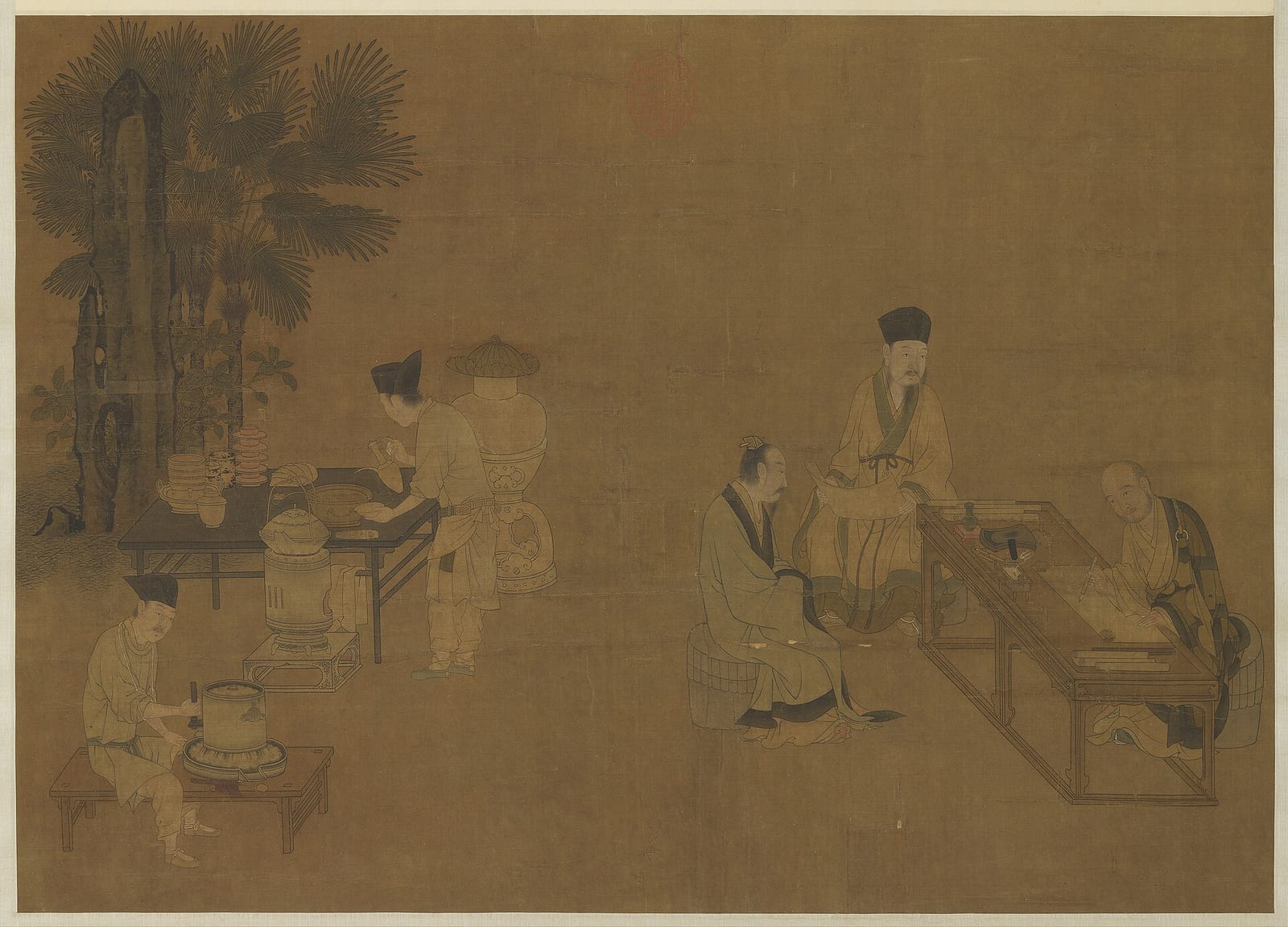
In the Song dynasty, tea was commonly prepared from powdered leaf. The tea was ground fine, sifted, placed in a bowl, hit with boiling water and whisked with a bamboo brush until the liquor and foam formed a fine texture. Whisked tea was not simply “mixing tea powder with water”: it involved a whole sequence of roasting, grinding, sifting, preparing water, mixing a paste, whisking and tasting.
Whisking steps
Common steps include roasting or drying the tea, grinding, sifting, preparing the water, warming the bowl, mixing the powder into a paste, adding water and whisking. The force and rhythm of whisking affect the fineness and density of the foam; water temperature and the fineness of the powder also matter. Tea books differ in their descriptions of vessels and steps, and no single text should be treated as a nationwide operating standard.
Tea contests
Tea contests compared foam, liquor colour, the water line and whisking technique. They were both a game of skill and a social and aesthetic activity. Different texts describe different criteria, and no single set of victory rules should be treated as a nationwide system. The popularity of tea contests also encouraged the development of black-glaze bowls, bamboo whisks and water kettles.
Legacy
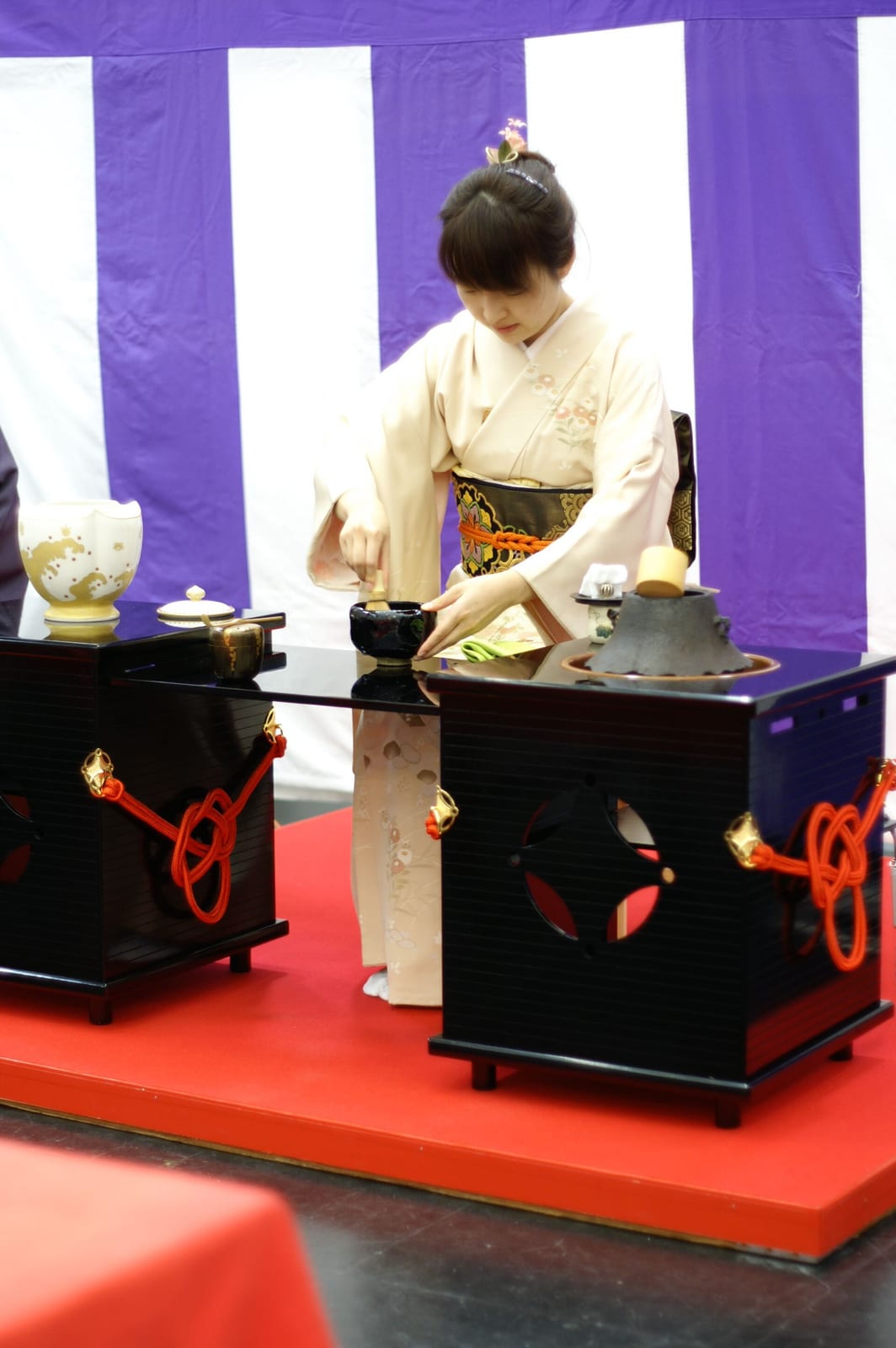
Whisked tea and tea contests encouraged the development of Jian bowls, bamboo whisks and water kettles. Through monastic and cultural exchange they also influenced the Japanese tea ceremony. After the Ming and Qing dynasties, loose-leaf brewing became the dominant form of everyday tea drinking, and whisked tea ceased to be the main daily method. As a technique and aesthetic tradition, however, Song whisked tea still attracts modern tea-culture research and reconstruction.
Common misconceptions
- Is whisked tea the same as matcha? There is a historical connection, but Song whisked tea and Japanese matcha differ in vessels, etiquette and tea products.
- Do tea contests judge only the foam? No. Colour, the water line, aroma, taste and technique could all be compared.
- Did everyone in the Song dynasty drink tea this way? No. Whisked tea was most common among literati, monasteries and the upper classes, while everyday tea drinking took many forms.
- Are ancient texts completely consistent? No. Works such as the Record of Tea and the Treatise on Tea in the Daguan Era each have different emphases.
Sources
- Treatise on Tea (Daguan Chalun), IHNS Chinese Academy of Sciences — Full Chinese text of Emperor Huizong’s treatise on whisked tea, foam and tea bowls.
- Treatise on Tea in the Daguan Era — Bibliographic reference; no stable online edition supplied.
- Record of Tea — Bibliographic reference; no stable online edition supplied.
This page is an AI-edited translation based on the reviewed Chinese source. It is not a human-expert endorsement; factual claims are bounded by the listed sources.