What it is
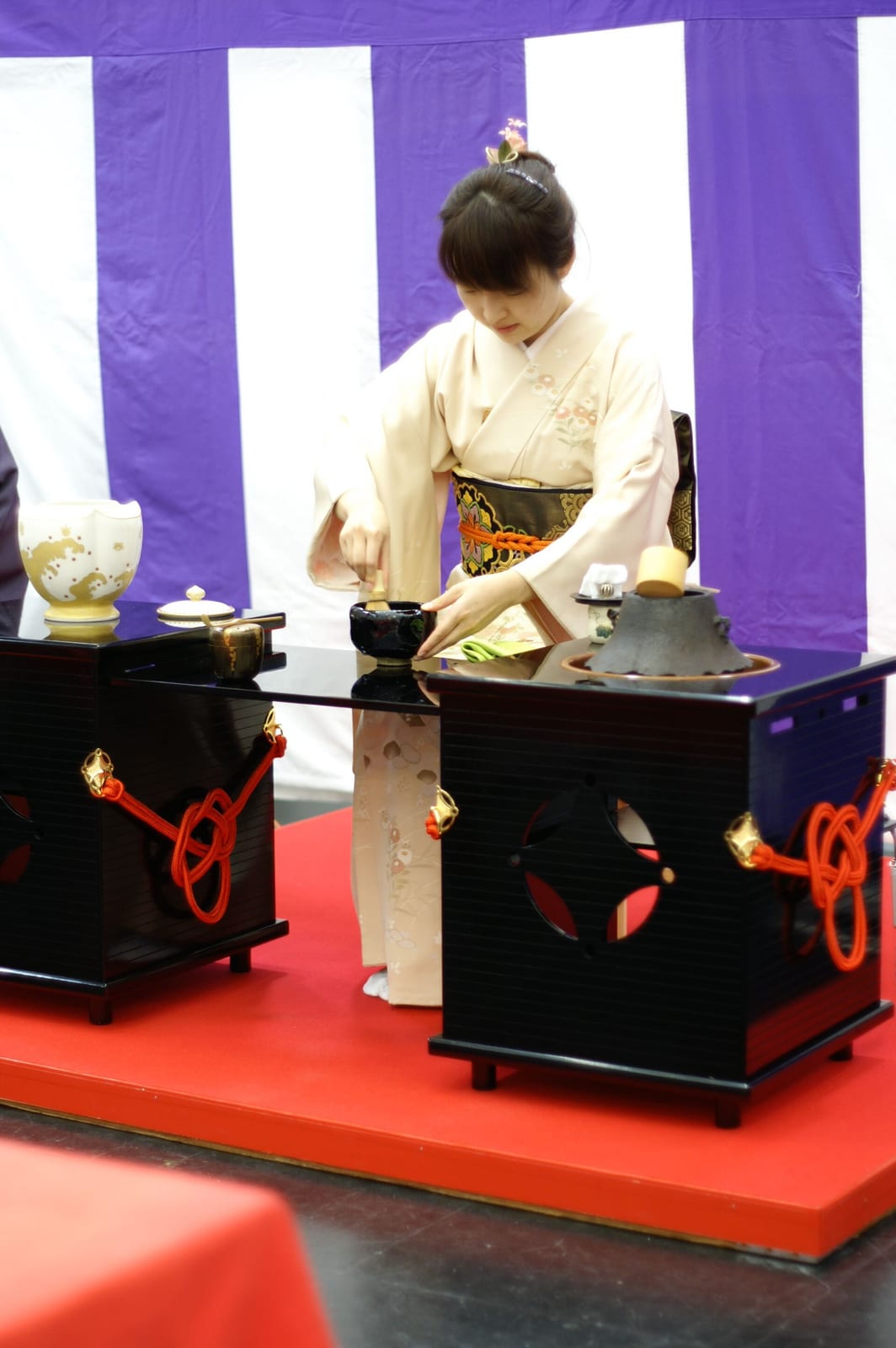
Japanese tea ceremony, or chanoyu, is a composite practice centred on whisking matcha. It includes the tea room, garden, utensils, etiquette, flowers and calligraphy. It is not a single school, and it is not an unchanging ancient ritual: gestures, utensils and pacing differ greatly by school, region and occasion.
History
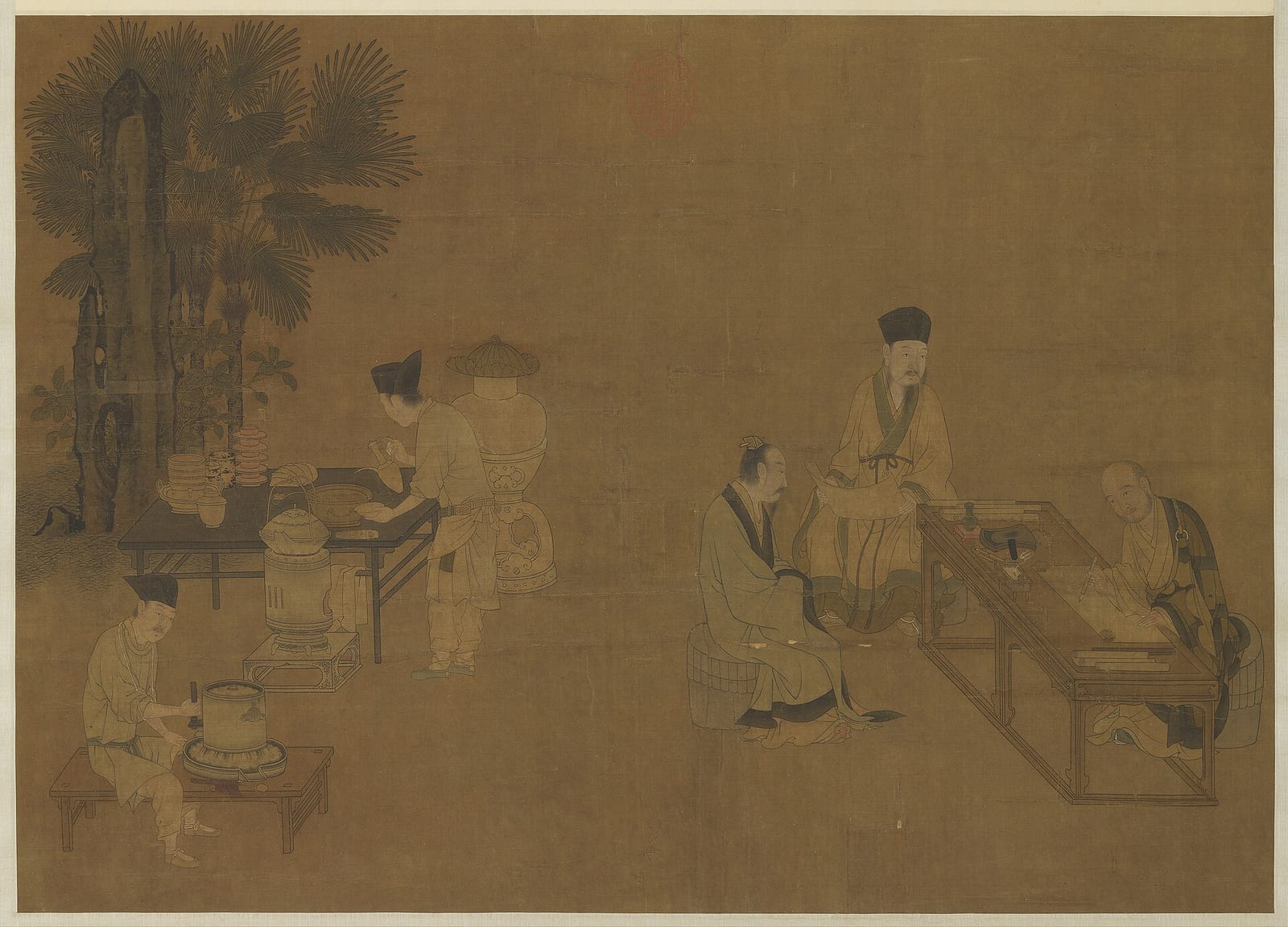
Tea arrived in Japan from China and first spread among temples and the aristocracy; from the Muromachi period through the Sengoku and Edo periods, distinct schools took shape. Sen no Rikyū and wabi aesthetics are central reference points, but the history is larger than one person: temple tea rites, warrior politics, townsman commerce and the tea-utensil trade all played a part.
Etiquette and utensils
The host–guest relationship, seasonal awareness and the choice of utensils all matter. Tea bowls, whisks, tea caddies and water jars each have their place and handling. The host expresses season and theme through utensils, flowers and hanging scrolls; guests respond by looking, asking and drinking. Procedures vary so much between schools that no single set of movements can stand for the whole.
Aesthetics and limits
“Wabi” is often used to summarise the aesthetics of chanoyu, but it is not the only interpretation, and the practice cannot be reduced to an appreciation of imperfection. Chanoyu combines aesthetics with strict etiquette and power relations; tea rooms, famous utensils and school lineages all belong to a historical context.
Common misconceptions
- Is chanoyu only about matcha? Modern chanoyu centres on matcha, but Japanese tea culture also includes sencha and gyokuro.
- Are the movements the same nationwide? No; schools and occasions differ greatly.
- Is chanoyu the same as wabi? No; wabi is an important aesthetic idea, but it does not cover the whole practice.
- Is chanoyu just a performance? No; it involves hospitality, utensils, space and history.
Related entries
- Sen no Rikyū: a major figure in tea history, but chanoyu was not created by him alone.
- The Record of Tea and Health: an early Japanese tea text.
- Song-dynasty whisked tea and tea contests: historically linked to Japanese matcha whisking, but not identical.
References
- Urasenke, “An Introduction to Chado” official English page: history, schools and practice.
- Urasenke, “About Urasenke Chado” official English page: Sen no Rikyū and wabi aesthetics.
- Urasenke, “茶の歴史” official Japanese page: tea's arrival from China, Shukō, Takeno Jōō and Sen no Rikyū.