Background
Before the nineteenth century, Britain imported tea from China, and the outflow of silver concerned the East India Company and the British government. After the East India Company's China monopoly ended in 1833, Britain looked seriously for places within its empire where tea could be grown. Assam, in north-east India, became the most important testing ground.
Discovery and experiment
In 1823, Robert Bruce found wild tea plants in the upper Brahmaputra valley of Assam. In 1834, Governor-General Bentinck set up a Tea Committee to gather information on suitable growing areas. The committee initially favoured Chinese tea varieties and sent people to China for seeds, which were raised in Calcutta and sent to Assam. The Chinese plants performed poorly; crossing with local tea bushes eventually produced a more locally adapted planting route.
The Assam Company
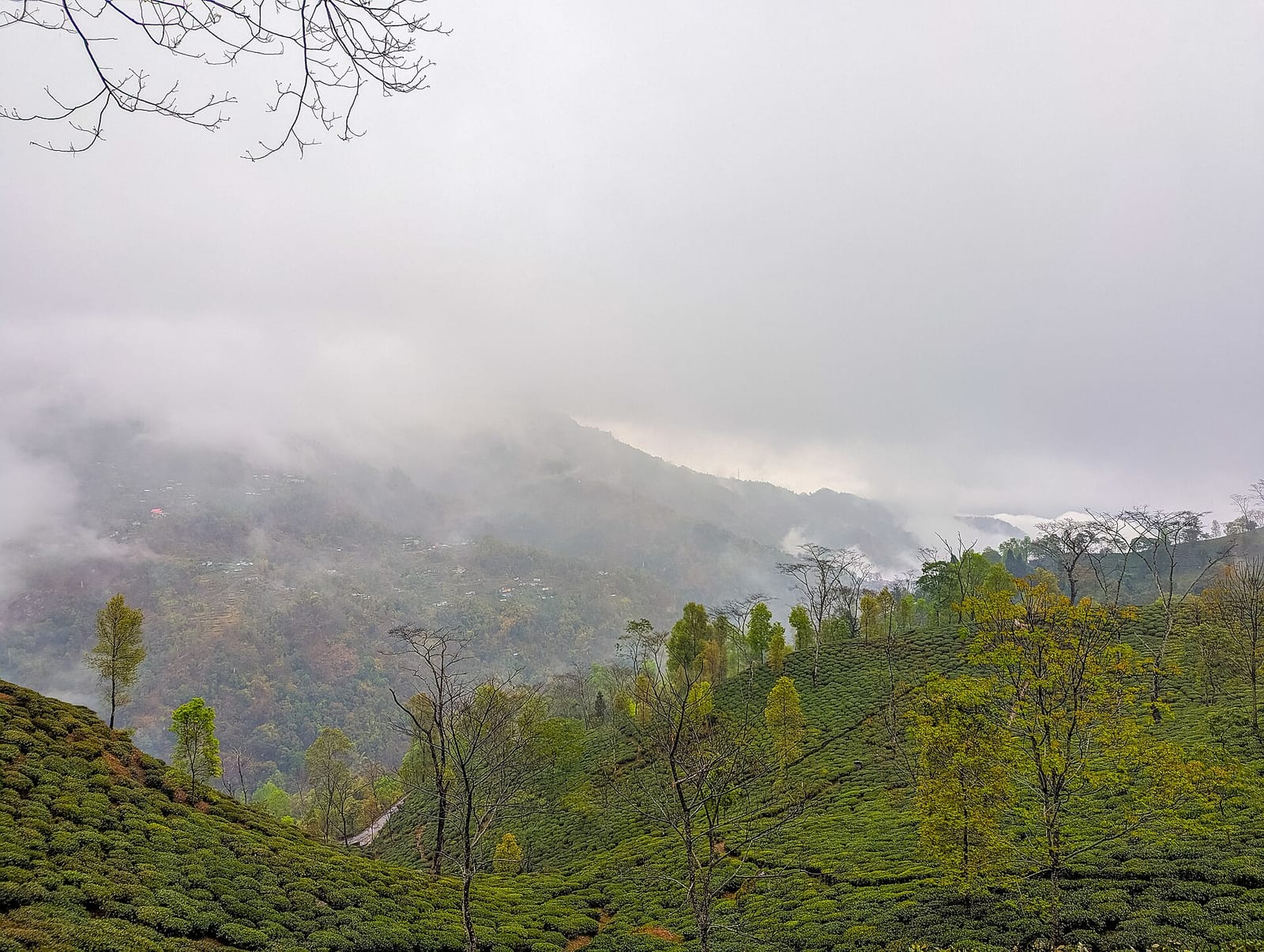
The Assam Company was formed in 1839 and took over the East India Company's experimental gardens in Assam, becoming India's first commercial tea-planting company. It began with substantial capital but struggled in its first decade. From the 1850s, improved manufacturing and estate management supported expansion. Assam gardens concentrated in the Brahmaputra valley; later planting spread to the Duars and Darjeeling.
Plantation system
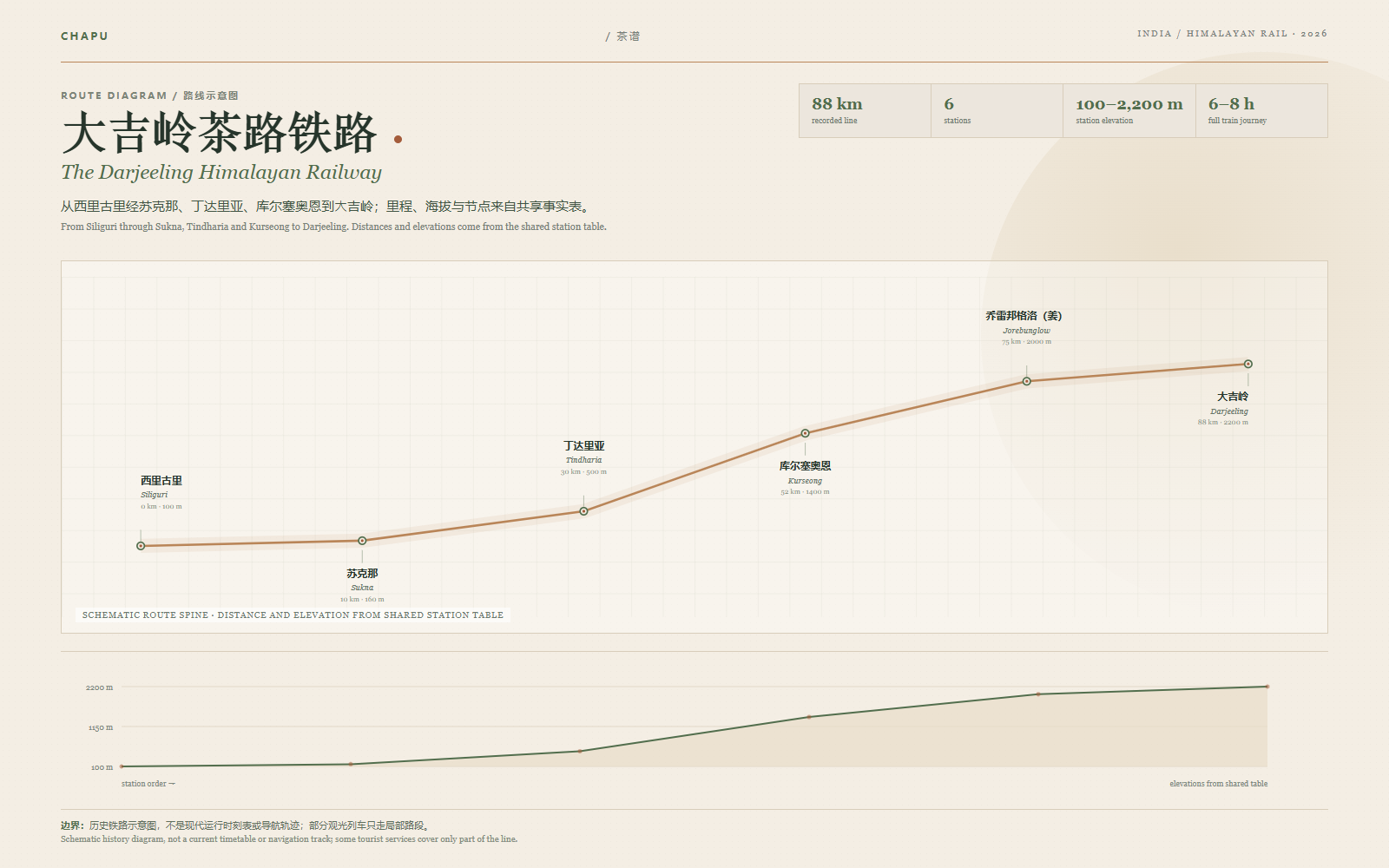
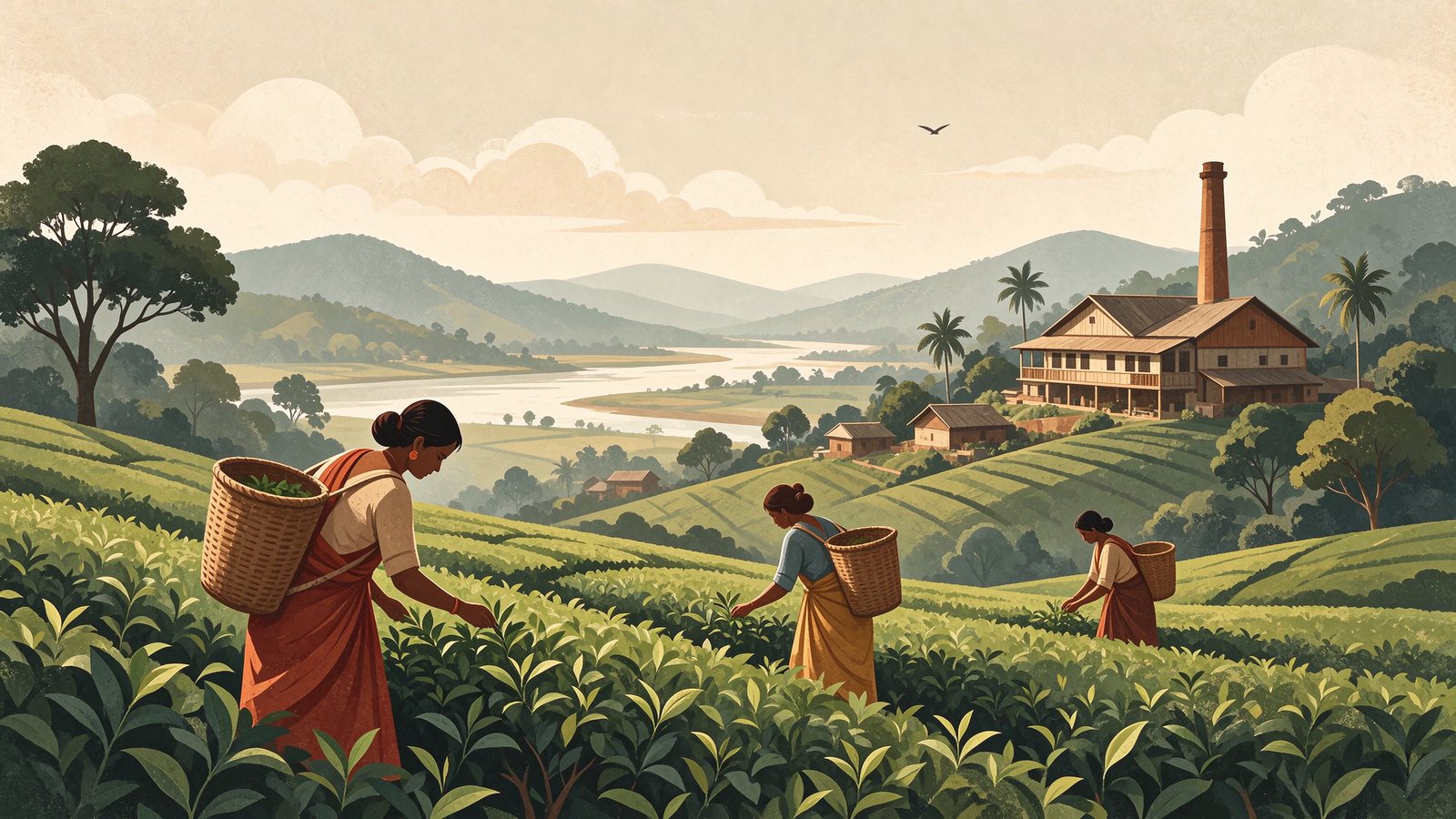
The Indian tea industry was not a natural extension of smallholder farming. It was a plantation system built from colonial land law, joint-stock capital and indentured labour. Estates cleared forest, planted shade trees, built roads and factories, and divided plucking, withering, rolling, fermentation and drying into separate tasks. In the late nineteenth century, railways and steamships carried Assam tea to Calcutta and on to London auctions.
Output and institutions
Late nineteenth-century Indian output rose quickly and displaced part of China's share of the British market. The often repeated claim that Indian production surpassed China in 1903 needs to be checked against the statistical scope and regions used. After independence in 1947, ownership, labour rules and export structures changed. In 1953 the Government of India established the Tea Board to regulate, promote and research the industry.
Timeline
- 1823: Robert Bruce finds wild tea in Assam.
- 1834: the Tea Committee is established in India.
- 1839: the Assam Company is formed.
- 1850s–1870s: gardens expand in Assam, the Duars and Darjeeling.
- Late 19th century: Indian tea enters the British market in volume.
- 1953: the Tea Board India is established.
How to read this history
Do not read “discovery of wild tea” as “India had no tea.” Assam had local tea plants and local ways of using tea. The modern industry was shaped by colonial capital, global trade and local ecology together. Read the plant, land, labour, railway and market at the same time, not only a founder's story.
Source boundary
This page follows Assam and the Tea Board's institutional account. It does not cover every Indian tea region, and it does not treat colonial production figures as today's industry data. Output, area and export numbers change with statistical scope and should be checked against the Tea Board or reliable industry reports.