Indian chai usually means a strong black tea boiled with milk and sugar. Masala chai adds spices — ginger, cardamom, cinnamon, clove, pepper, fennel — in recipes that vary by household, region and festival. Calling all chai “spiced tea,” or treating one street recipe as the “Indian standard,” turns an everyday drink into a tourist symbol.
Tea, milk, sugar and spice
Chai simply means “tea” in Indian languages. The base is often Assam CTC: fine granules that extract fast, give strong colour and stand up to repeated boiling and plenty of milk. The usual method boils water, tea and spices together, then adds milk and sugar and boils again before straining into small cups. Water-to-milk ratios range from 1:1 to 2:1; the boil lasts 3–5 minutes, and street stalls go stronger and sweeter.
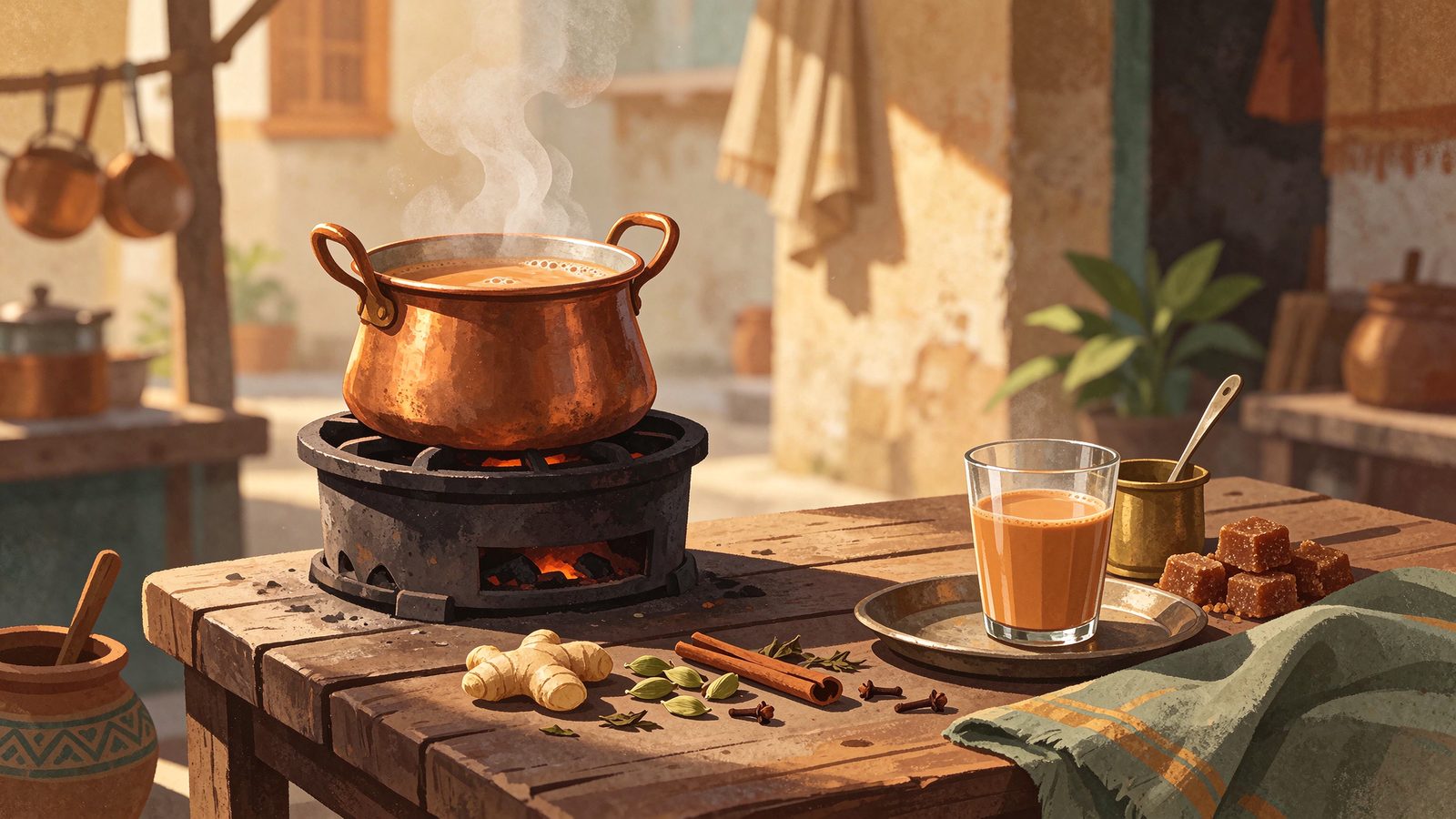
Masala means “a mix of spices,” not a fixed recipe. Ginger (adrak) and cardamom (elaichi) are most common; cinnamon, clove, pepper, fennel, turmeric and nutmeg all appear. Northern winter chai leans ginger and pepper; southern blends lean cardamom and cinnamon; families adjust to elders' taste. You can ask for “less sugar” or “extra ginger,” but each stall's ratio differs.
Street and home
The chai wallah uses a small pot on gas or charcoal, boils the tea repeatedly and pours into small glasses; some “pull” the tea from a height to cool it and create foam. Home versions may be lighter, or add lemon, mint, tulsi or herbs. Indian tea consumption is mainly milk tea, but green, oolong and specialty loose-leaf tea are growing in cities.
Chai's social range is wide: dawn roadside, railway stations, office breaks, family hospitality, weddings and festivals. It is both a stimulant and a social pause. Treating chai only as “street food” ignores home and office routines; treating it only as “exotic spiced tea” ignores its working-class base.
History
Commercial tea growing in India began under British colonial rule in the 19th century, with Assam, Darjeeling and Nilgiri emerging as regions. In the 20th century the Indian Tea Association promoted the “tea break,” making tea a factory and office drink; CTC lowered costs and helped milk-and-sugar tea become a mass beverage. India is now the world's second-largest producer and largest black-tea producer and consumer, directly employing over one million people.
This history includes colonial violence and a later local reinvention. Chai is not a simple copy of “British tea”: Indians used stronger tea, more milk, more sugar and local spices to turn a colonial commodity into their own daily drink. Calling chai only a colonial leftover tells half the story; the other half is Indian social adaptation.
Brewing and boundaries
Home method: 500 ml water with 2 tbsp CTC, ginger and cardamom, boil 3 minutes; add 250 ml whole milk and sugar, boil 2 minutes; strain. For stronger tea, boil longer; for lighter, use less leaf or shorten the second boil. Assam broken leaf can replace CTC, with a different aroma.
Chai is not “spiced tea powder” or instant milk tea; boil time, milk ratio and spice strength change the result. Masala chai is not the only chai; many Indians drink plain milk tea. “Authentic recipe” is usually family memory, not a national standard.