From luxury to fashion
In the mid-seventeenth century, tea reached Britain through Dutch and Portuguese trade. It was expensive and circulated mainly in court, aristocratic and coffee-house circles. London coffee houses began selling tea in the 1650s; Samuel Pepys recorded his first tea in his diary in 1660. In 1662, Catherine of Braganza married Charles II and brought her taste for tea to the court, helping make it fashionable among elites.
Catherine did not introduce tea to Britain, but she made it a court and aristocratic fashion. In 1664, the East India Company brought its first 100 pounds of Chinese tea from Java, and tea entered the company's trade system.
Taxes, smuggling and grocers
In the eighteenth century, high duties kept legal tea expensive and smuggling flourished. In 1784, Pitt the Younger's Commutation Act cut the tea duty to about 12.5 percent. Legal tea became cheaper, and grocers and ordinary households began to consume it more widely.
The tax cut was not the only cause. The East India Company monopoly, the London auction, fast sailing ships and retail networks expanded supply together. In the late eighteenth century, tea moved from luxury toward a household drink, often taken with sugar.
Indian and Ceylon tea
In the nineteenth century, output from Assam, Darjeeling and Ceylon rose, and Britain no longer depended entirely on China. In 1851, annual British consumption was less than 2 pounds per head; by 1901, cheaper imports from India and Ceylon had pushed it above 6 pounds. Lower prices, railways and steamships, grocery chains and advertising all supported mass consumption.
Afternoon tea and tea wares
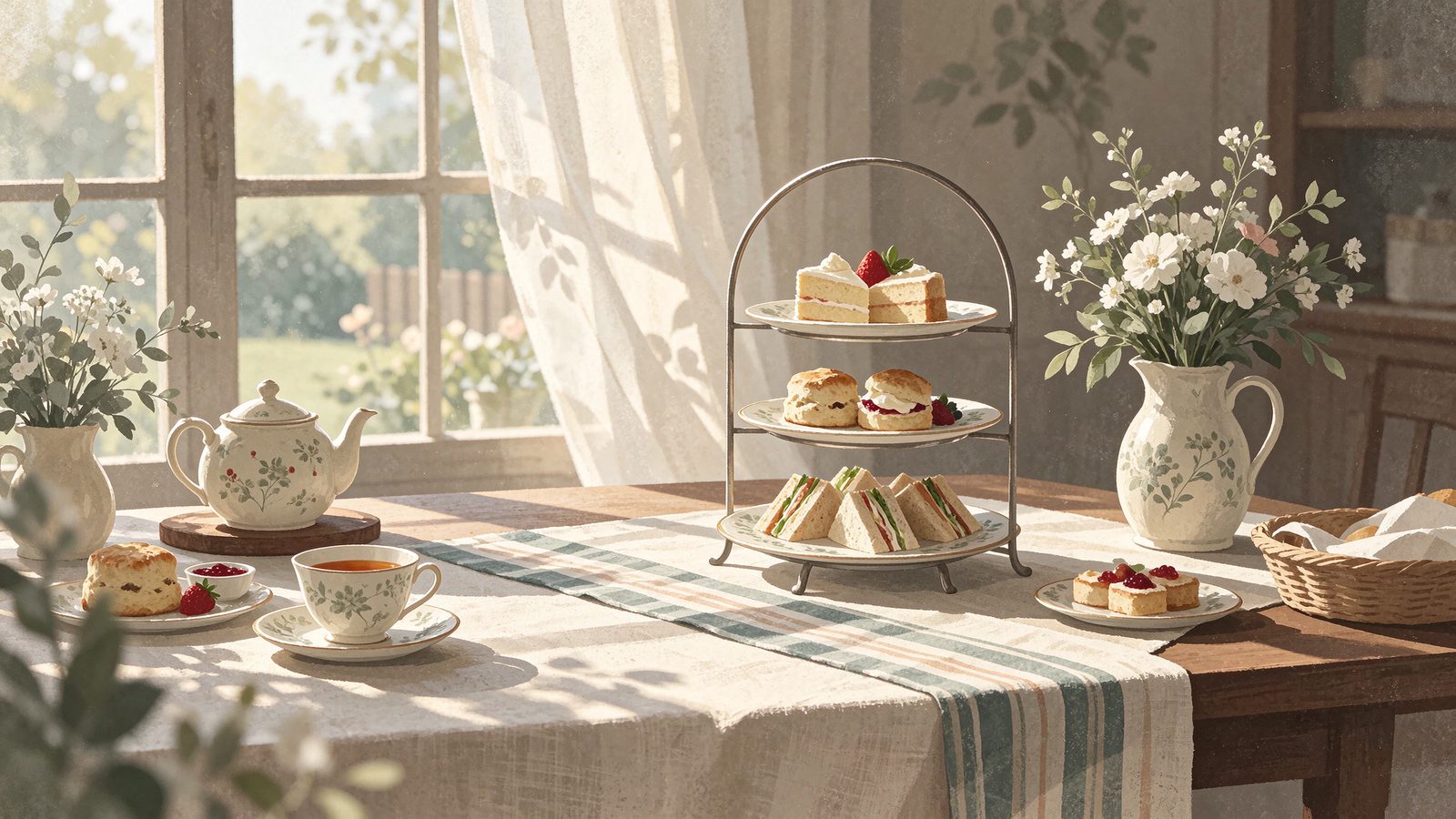
In the mid-nineteenth century, Anna Maria, the seventh Duchess of Bedford, combined afternoon food with tea, giving shape to the social occasion of afternoon tea. This has court and elite origins and does not represent all British tea drinking. Working households more often drank tea at breakfast, at breaks and at dinner. Tea wares became more middle-class: bone china cups, teapots, milk jugs and sugar bowls became part of domestic display.
Timeline
- 1650s: London coffee houses begin selling tea.
- 1662: Catherine of Braganza arrives in Britain and court tea fashion expands.
- 1664: the East India Company imports its first 100 pounds of Chinese tea.
- 1784: the Commutation Act sharply reduces tea duty.
- 19th century: Indian and Ceylon tea enter Britain in volume.
- 1901: British consumption exceeds 6 pounds per head per year.
How to read this history
Do not attribute British mass tea drinking to one queen or one act. Prices, taxes, imperial plantations, shipping, retail and advertising worked together. Court fashion supplied the symbol; Indian and Ceylon tea supplied cheap volume; grocers and advertising turned tea into an everyday commodity.
Source boundary
This page follows the UK Tea & Infusions Association and discusses broad trends in seventeenth- to twentieth-century British consumption. Per-capita figures vary with statistical scope. Afternoon tea, working-class tea and regional differences cannot be reduced to one model; specific household practice needs local archives and oral history.