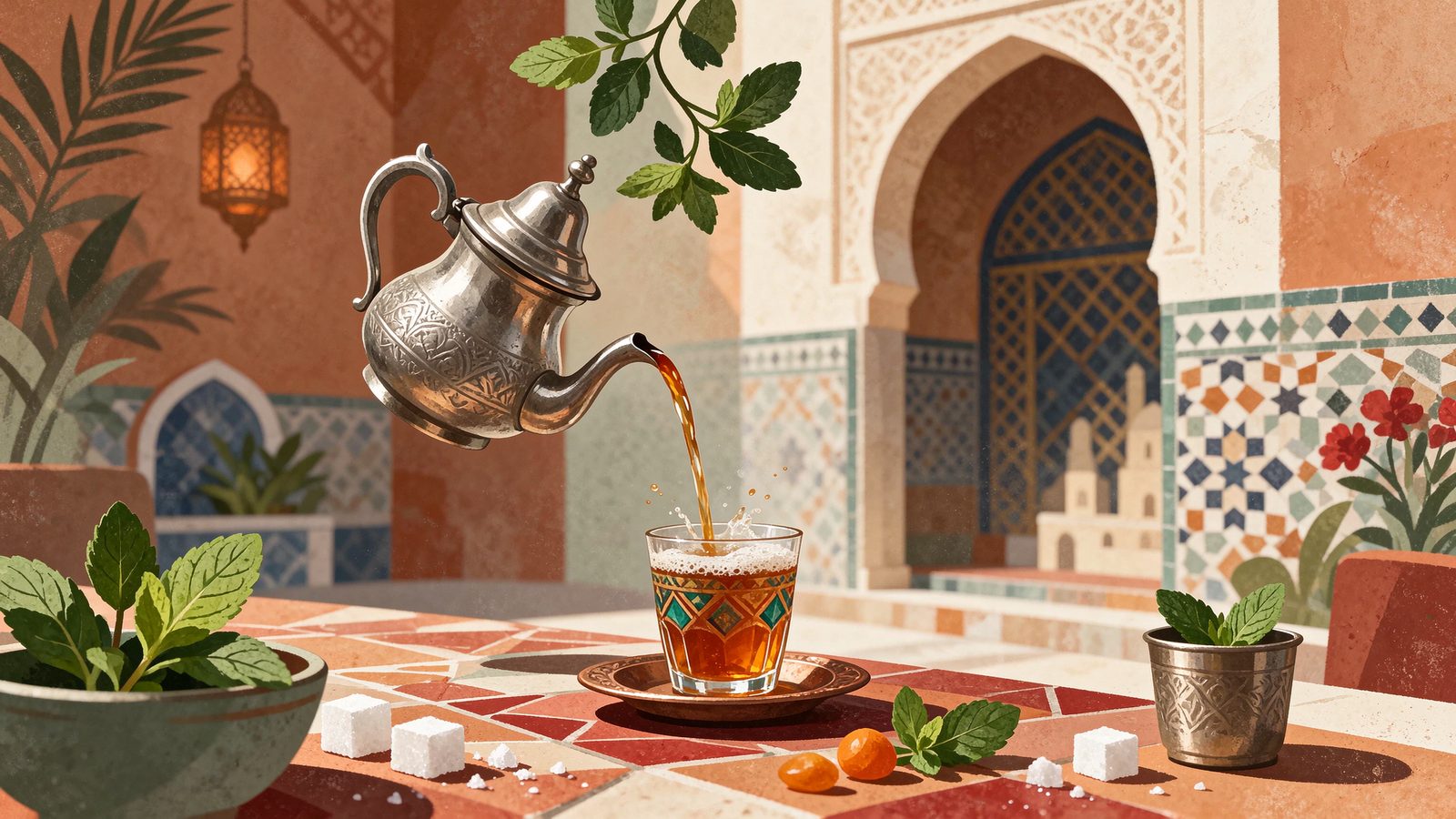
Moroccan mint tea (atay bi na'na') is a ceremonial everyday custom: Chinese gunpowder green tea, fresh mint and plenty of sugar, served in small coloured glasses and poured from a height. It is not a tea type but a ritualised way of drinking green tea; treating “Moroccan mint tea” as a cultivar misses the vessels, gestures and social meaning.
Tea, mint and sugar
The base is gunpowder tea imported from China: tightly rolled, durable, with a strong, slightly smoky, woody liquor. The usual method rinses the leaf with boiling water and discards the first water to reduce bitterness; then tea, mint and sugar go into a small silver pot, boiling water is added, and the pot rests a few minutes. Sugar is generous — traditionally, sweeter tea signals a valued guest — though urban families and younger drinkers use less.
Mint is usually spearmint, sometimes peppermint. It is not a garnish: it steams with the green tea to create aroma. Some families add lemon, orange blossom water or wormwood. The pot, coloured glasses and brass tray are part of the ritual; even a modest Moroccan home may treat a tea set as an important possession.
Pouring from a height
The pour starts high — tradition says about one metre — and sends a thin stream into the small glass, creating foam. It aerates and cools the tea and lifts the mint aroma; it is also a host's performance. A steady pour with fine foam shows skill. Too forceful and it spills; too low and there is no foam.
Southern Morocco has a “three infusions” idea: the first glass strong and bitter, the second balanced, the third light and sweet, often linked to life, love and death. This is a regional and literary framing, not a national rule. Urban hospitality may make one pot and top it up twice; home routine is looser.
History
Morocco is not a tea-growing origin. Green tea entered through Saharan caravans and European ports and became an urban and court drink in the 18th–19th centuries; the timing of mint's addition varies by local account and should not be given as one precise year. Tea's spread was tied to trade, sugar prices and hospitality culture, not to an ancient “timeless” origin.
Morocco is a major African importer of Chinese green tea. The trade shaped teaware, sweetness and hosting etiquette. Calling mint tea “thousands of years old” exaggerates; calling it “just imported tea” ignores the local reinvention.
Brewing and boundaries
Home method: rinse 10 g gunpowder with 150 ml boiling water; add 1 litre boiling water, a handful of mint and 3–5 sugar lumps; steep 3–5 minutes; pour one glass out and back twice to mix, then serve from a height. Adjust sugar; do not boil mint for long or it turns bitter.
Mint tea is not “green tea with mint flavouring”; fresh mint, gunpowder and sugar are the core. It is not “the sweeter the more authentic”: sweetness is a hospitality signal, not a quality grade. The high pour cools and aerates; it is not flavour magic, and a low pour at home is still valid, just less theatrical.