Korean tea culture centres on green tea but also includes fermented tea (balhyocha), grain tea, herbal tea and modern blends. Boseong, Hadong and Jeju are the main regions; the tea rite (darye) emphasises quiet, hospitality and vessels, yet everyday Korea drinks far more coffee than tea, and tea appears mainly in ritual, tourism and specialty markets. Equating Korean tea culture with “Japanese tea ceremony” or “daily green tea” is inaccurate.
History
Tea entered the Korean peninsula from China during the Three Kingdoms period and developed in royal, monastic and literati circles under Silla and Goryeo. Goryeo had tea rites, tea gatherings and whisked tea; Joseon Confucian ritual brought tea into court and scholar-official life, but Buddhist tea culture was suppressed and everyday tea contracted. In the late 20th century the industry and culture revived: Boseong and Hadong restored gardens, and tea-rite institutes and private tea gatherings returned.
Boseong's documentary evidence includes the Sinjeung Dongguk Yeoji Seungnam and Sejong Sillok Jiriji, plus wild tea colonies around Daewonsa and Jingwangsa. In 2018 the traditional tea agriculture system was designated National Important Agricultural Heritage No. 11, centred on terraced farming and the sea-mountain climate, not a quality certificate for one lot.
Types and vessels
Korean green tea is graded by picking season — Ujeon, Sejak, Jungjak, Daejak — and by fixing method: iron-cauldron pan-firing (deokkeum) or steaming (jeungje). Fermented tea (balhyocha) sits between green and black, with an orange liquor and honeyed aroma; grain teas such as barley and corn are everyday meal drinks and contain no tea polyphenols.
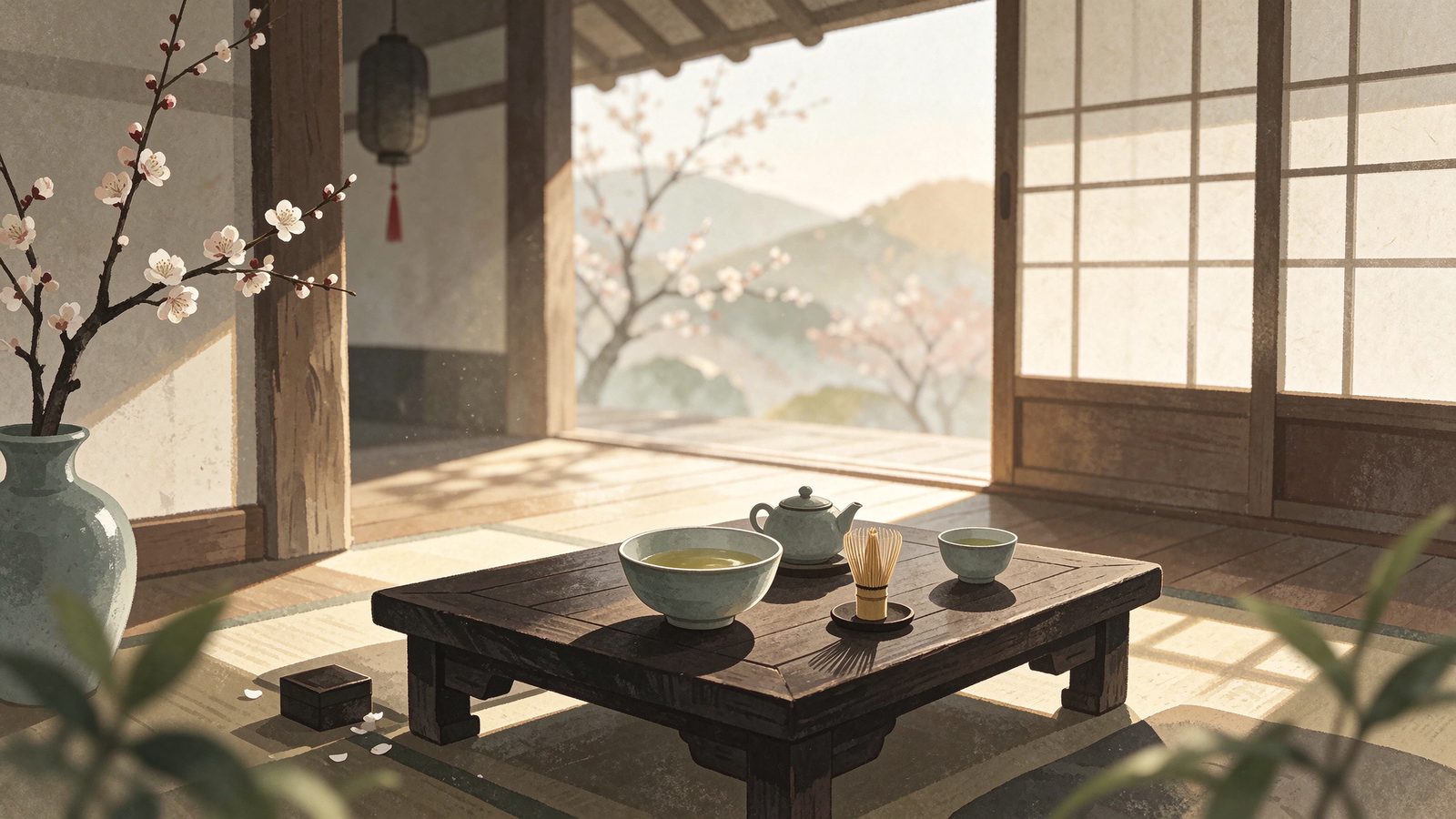
Darye uses a tray, teapot, cups, cloth and scoop; the movements are simpler than Japanese chanoyu and stress two-handed passing, guests before host, quiet and respect. The setting can be a hanok or a modern tea table; not every Korean knows a full rite, and families use simplified versions. The “rite” is social relationship, not performance.
Regions and scenes
Boseong is one of Korea's largest green-tea regions, with hillside rows, sea-mountain mist and terraced landscapes at the centre of tea tourism; Hadong is known for wild tea trees and traditional pan-firing; Jeju for volcanic soil, organic tea and matcha material. Tea tourism combines gardens, tea rooms, hands-on processing and film locations into a “visit-able” culture.
Modern Korean tea appears in traditional tea rooms, temples, tea-rite classes, specialty shops and convenience-store bottled tea. Coffee density is very high, and tea is an alternative rather than the default; younger drinkers return through iced tea, cold brew and tea snacks. “Everyone drinks tea daily” ignores coffee's dominance.
Brewing and boundaries
Korean green tea: 70–80°C, 3 g to 150 ml, about one minute for the first infusion, three infusions. Pan-fired tea leans roasted chestnut and grain; steamed tea leans marine and fresh bean. Fermented tea: 90°C, 4 g to 200 ml, 2–3 minutes. Barley tea is boiled 5 minutes and is a grain drink.
Korean tea culture is not a copy of Japanese chanoyu; darye has different movements, vessels and history. It is not “only green tea”: fermented, grain and herbal teas are part of daily life. Boseong is a region, not a grade; “tea capital” is tourism narrative, not a quality ranking.