American tea culture runs on iced tea and black tea bags. In 2024 Americans consumed about 86 billion servings, or 4 billion gallons; about 86% was black tea, 14% green, the rest oolong, white and dark; some 160 million people drank tea daily, and tea was found in over 80% of households. It also carries the political memory of the Boston Tea Party, Southern sweet tea, bottled tea and a specialty loose-leaf scene. “American tea” is not one tea type.
An iced-tea nation
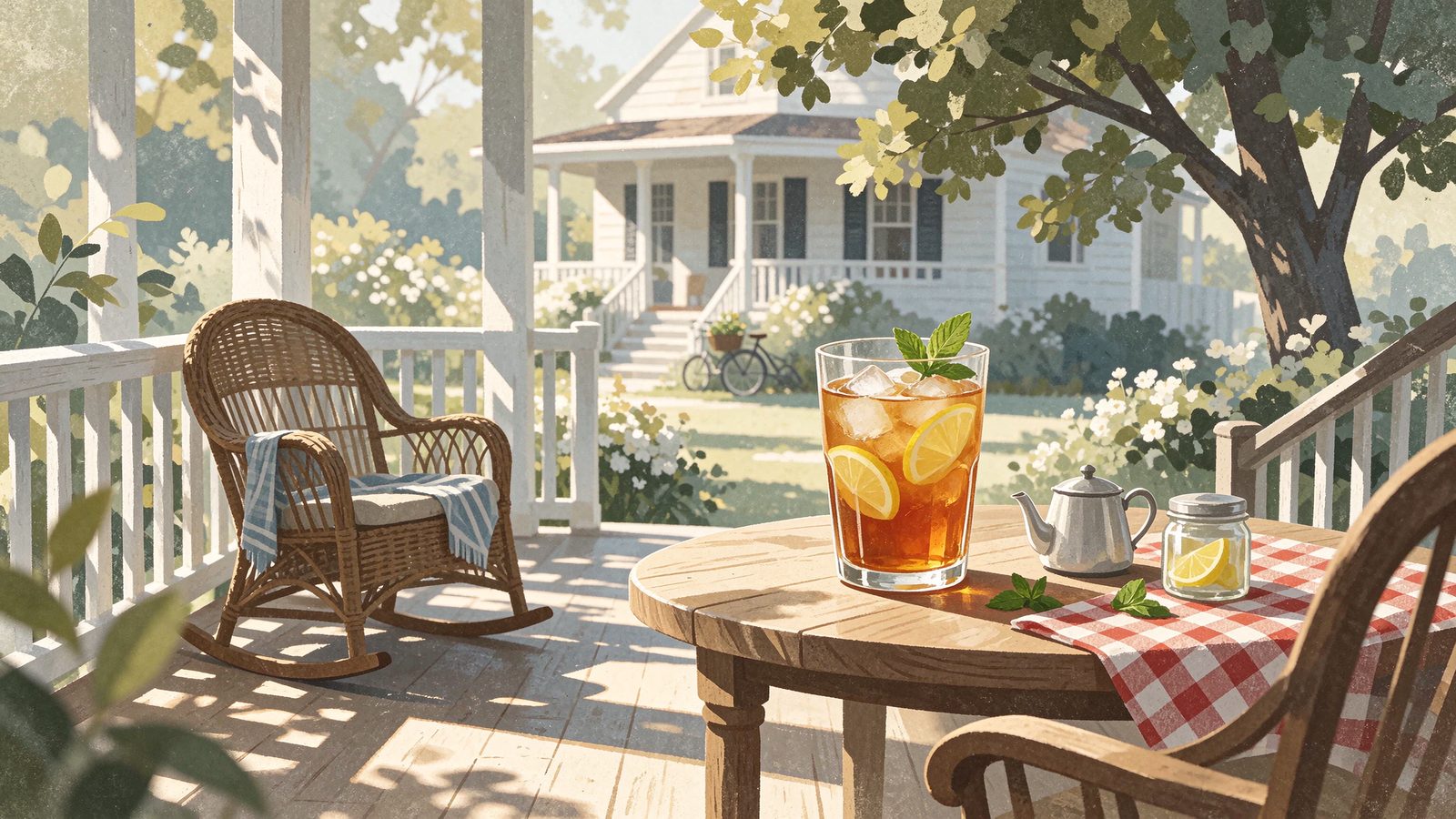
The most distinctive fact is iced dominance: the Tea Association estimates more than three-quarters of US tea is drunk cold. Bottled and ready-to-drink tea is the fastest-growing segment, bags remain the household staple, and specialty loose leaf expands in cities. This differs from British hot tea and Chinese plain-leaf tea: Americans treat tea as an all-purpose alternative to water, not a ritual.
Modern iced tea is often traced to the 1904 St. Louis World's Fair, where merchant Richard Blechynden supposedly poured hot tea over ice in a heatwave. The story has a legendary edge, but iced tea did become a national summer drink in the 20th century. Refrigerators, ice makers, cars and suburban life reinforced it.
The Boston Tea Party
On 16 December 1773, colonial protesters dumped East India Company tea into Boston Harbour to oppose the Tea Act and “no taxation without representation.” Tea became part of an American political myth: the target was tax and monopoly, not tea drinking. After the event the colonies briefly boycotted tea and coffee gained ground, but tea did not disappear; 19th-century trade and immigration brought it back.
Treating the Boston Tea Party as proof that “Americans never drank tea” misreads it. It was a protest against imperial taxation, with tea as the most visible commodity. US tea consumption grew through the 19th and 20th centuries, especially in the South and immigrant cities.
Sweet tea and regional difference
The US South has a sweet-tea tradition: strong black tea with plenty of sugar, chilled, common in homes, church suppers and fast food. Southern sweet tea is not simply “sweetened iced tea”; sugar level, tea strength and ice ratio have local norms. In the South, “tea” may default to sweet iced tea; in the North, to hot tea or unsweetened iced tea.
The Northeast and cities have a longer tea-import and specialty history; the West Coast, shaped by Asian immigration and health culture, is more active in green, matcha, oolong and herbal tea. Reducing American tea to “bagged black tea” misses Southern sweet tea, Latin American mate, Asian immigrant tea and the specialty scene.
Brewing and boundaries
Hot black tea: 90–95°C, 3 g to 200 ml, 3–5 minutes; tea bags usually 3–4 minutes. Iced tea: double the leaf (6–8 g per 500 ml), brew 5 minutes, sweeten while hot, chill and add ice; do not make “sun tea” by leaving it at room temperature for hours, a food-safety risk. Cold brew: 10 g per litre, refrigerate 8 hours.
“American tea” is not a tea type, and not “only iced tea”; it is a mix of consumption structure, regional habit and political memory. Tea bags are not inherently low quality, and loose leaf is not automatically high quality. The Boston Tea Party was a tax protest, not an anti-tea manifesto.