Background
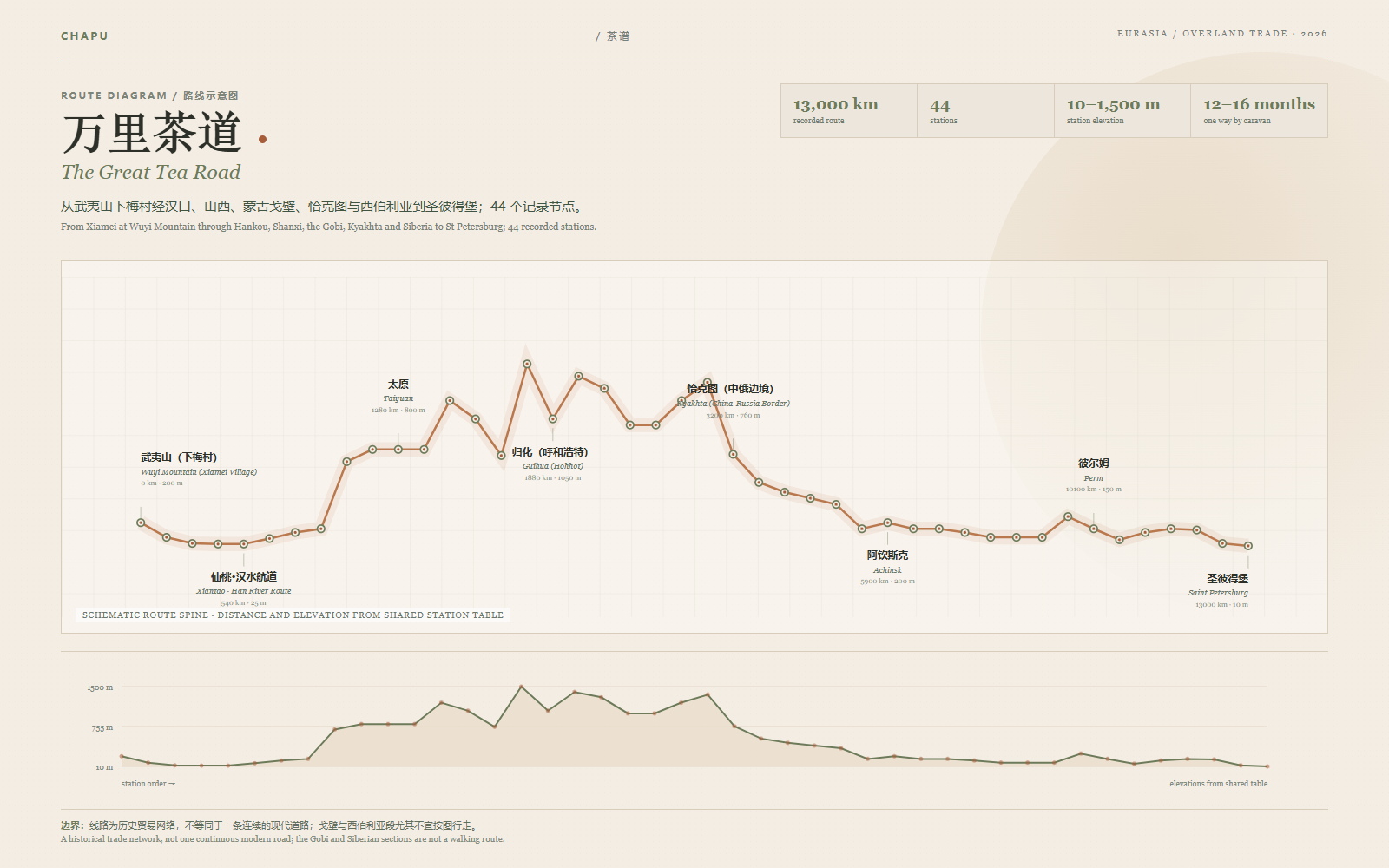
In the seventeenth century, Russian missions and caravans began bringing tea back from Beijing. After the 1689 Treaty of Nerchinsk, Sino-Russian caravan trade expanded. The 1727 Treaty of Kyakhta fixed the border and established a border market. Kyakhta, in what is now Buryatia in Russia, and Maymachen on the Chinese side became the main exchange points.
How the trade was organised
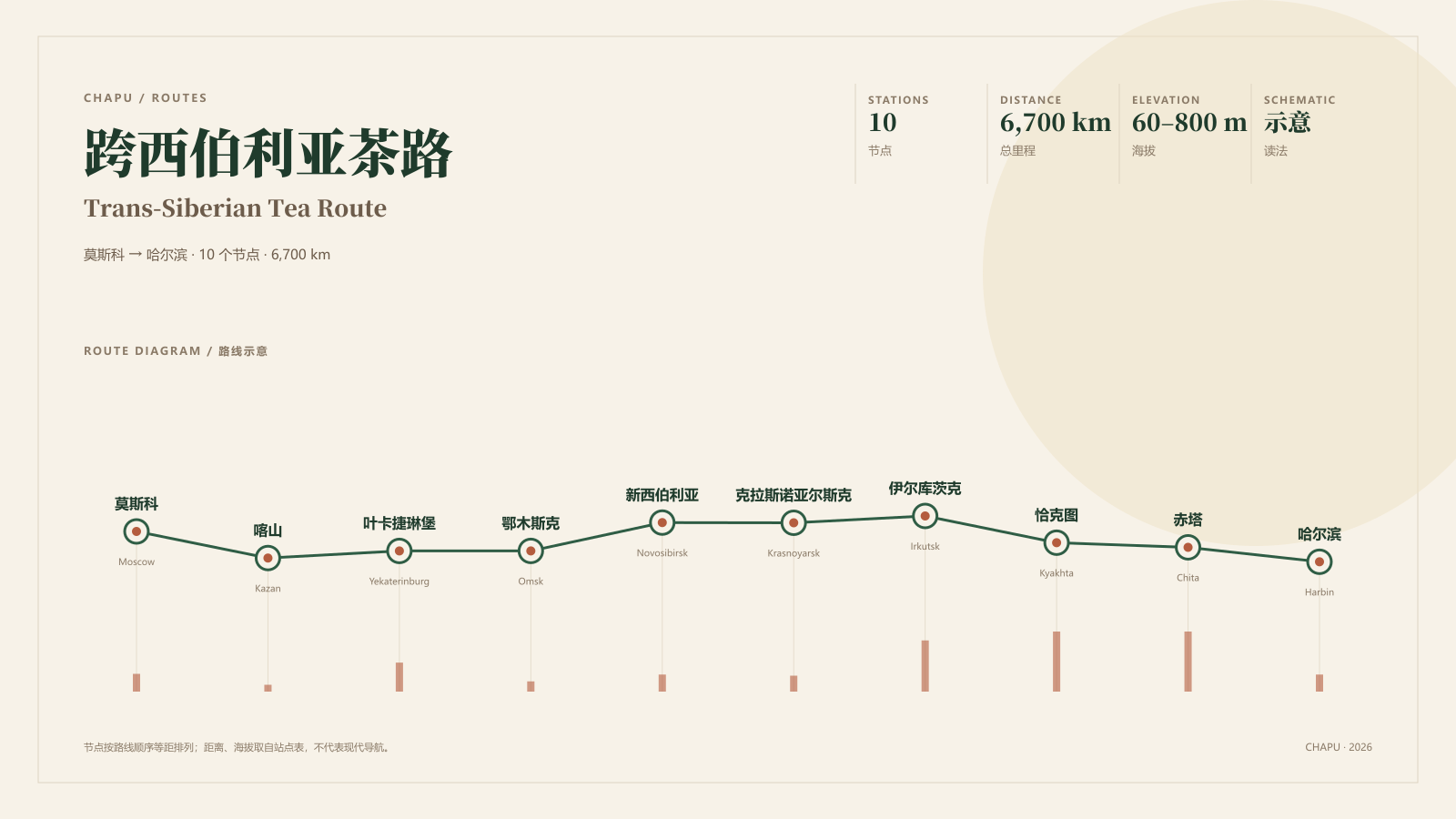
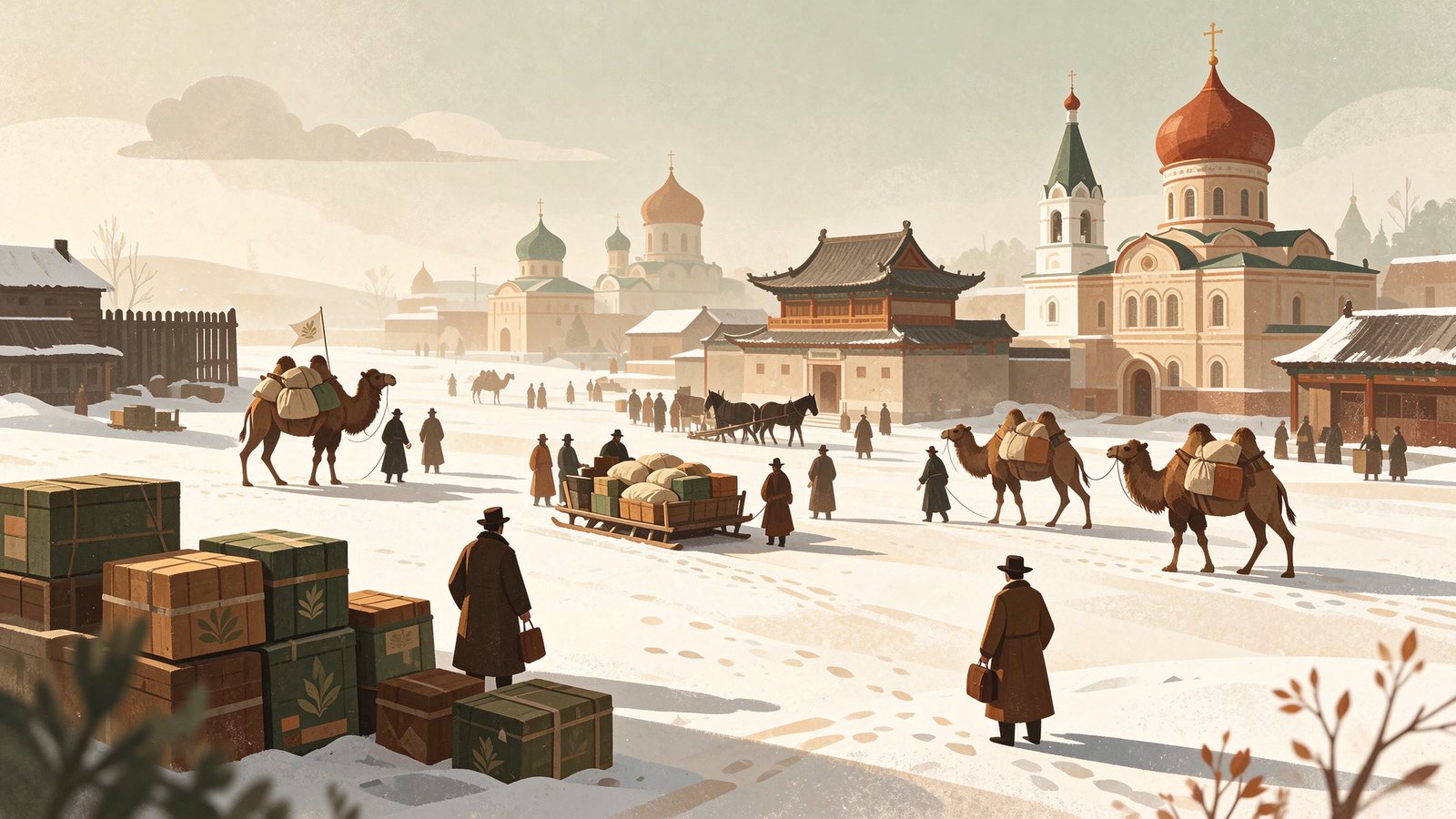
Kyakhta was not a free market. It was border trade regulated by both states. Russian merchants needed permission, paid duties and traded in designated seasons; Qing officials and licensed merchants managed the Chinese side. Tea travelled overland from southern China to Maymachen, was packed and transshipped at Kyakhta, then carried across Siberia to Irkutsk, Nizhny Novgorod and Moscow.
Before transport, tea was compressed and packed in leather or wooden chests to reduce volume and moisture. In the late eighteenth century, tea made up about thirty percent of Chinese goods exported through Kyakhta. In the first half of the nineteenth century it became the dominant import. Studies of the trade record annual tea imports rising from tens of thousands of poods in the early 1800s to more than one hundred thousand poods in the 1830s.
Why tea
Russian tea drinking and overland trade reinforced each other. Tea travelled better than alcohol and kept longer than many textiles. For Russia it was a reliable source of customs revenue; for Qing merchants it was a bulk good that could be exchanged for caravan goods. Kyakhta's growth also supported Siberian transport, inns, finance and crafts.
Decline
After the mid-nineteenth century, steamships, the Suez Canal and Russian Far Eastern ports changed transport. From the 1860s, tariff and trade rules shifted, and overland tea trade declined. The Trans-Siberian Railway, completed at the end of the century, kept tea moving overland but changed route, speed and cost.
Timeline
- 1689: the Treaty of Nerchinsk opens larger Sino-Russian caravan trade.
- 1727: the Treaty of Kyakhta establishes the border market.
- Late 18th century: tea is about thirty percent of Chinese exports through Kyakhta.
- First half of the 19th century: tea becomes the core Kyakhta commodity.
- After the mid-19th century: shipping and institutional change reduce overland trade.
- Late 19th century: the Trans-Siberian Railway changes tea transport.
How to read this history
Do not read Kyakhta as a single road carrying tea straight from China to Moscow. It was a trade system maintained by two states, border towns, caravans, packing, tariffs and finance. Quantities, prices and shares differ between sources; this page gives only ranges that can be checked against academic or institutional accounts.
Source boundary
This page covers the organisation and trends of eighteenth- and nineteenth-century Kyakhta tea trade. It does not cover every Sino-Russian commodity, and it does not treat historical trade figures as current trade data. Routes, tariffs and prices need year-by-year archival checking; studies do not all use the same statistical scope for tea's share of exports.